The Left’s Left Turn in 1969
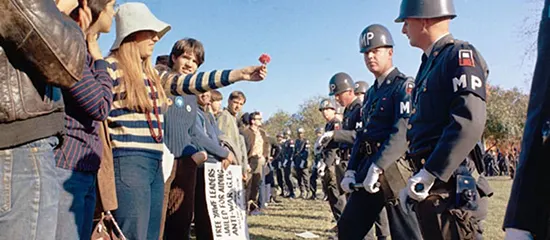
Campus takeovers. Massive protests against the war. Sit-ins. Civil disobedience. Strikes. Even riots. In June 1969, a lot of Americans wondered openly just how much further off the rails the country could get. And some others were trying to see how far they could push it.
Try as they might, though, the New Left was having a tough time dislodging the Establishment’s grip on America. The Vietnam War still raged. The masses were still oppressed. Racism was still a problem. Much of the 1960s had been spent fighting The Man, yet The Man was still in charge.
By June 1969, the political and social activists of the New Left had reached an impasse on what direction to take. Many believed the time had come to up the ante, but what was the next move? Perhaps answers would emerge at the Students for a Democratic Society National Convention taking place in Chicago June 18 through June 22.
It made sense for activists to pin their hopes to SDS. It had been at the forefront of the 60s political and social movement. Founded in 1960 out of the ashes of the Student League for Industrial Democracy and other fading leftist organizations, SDS entered the decade with a whole new mindset. Its leaders sought a clean break from the leftist movement of the Depression and post-World War II.
As outlined in their 1962 Port Huron Statement, the organization’s guiding manifesto, SDS saw society’s problems — racism, poverty, lack of education and health care, war, imperialism — as interlinked. The root cause, of course, was the Establishment, the real or perceived cabal of white power brokers who ran the federal government, the major corporations, and the banks. To combat this hydra, SDS proposed a broad struggle across all fronts. And they welcomed to their cause communists, anarchists, and basically any person or group who had an axe to grind with The Man. The more, the merrier.
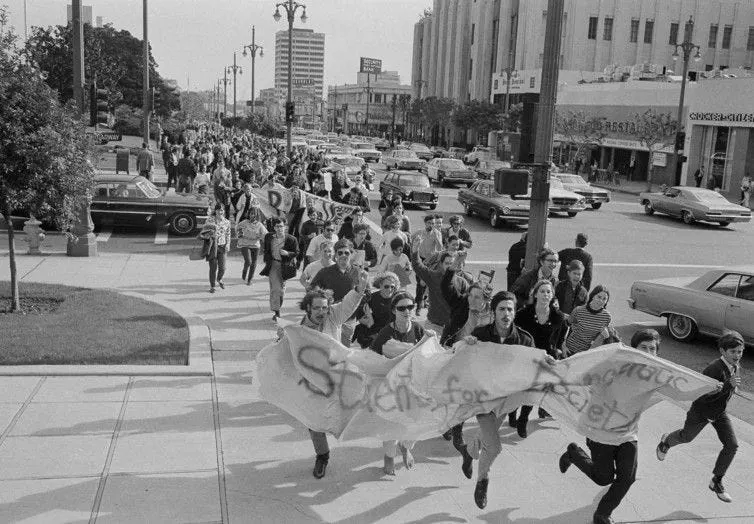
As the decade progressed, SDS became the front office of the New Left. It expanded relatively rapidly and was one of the driving forces behind the social movements taking place on America’s college campuses and beyond. But an interesting thing happened to SDS along the way that few saw coming at the time. Students for a Democratic Society was doomed to failure. Its fate was sealed in its origins.
By 1969, when the frustration among activists on the left was reaching its zenith, SDS was under the control of a whole new set of people. Many of the young people who were present at the birth of SDS and the Free Speech Movement had moved on. They may have still held the same ideals, but they had graduated from college and become absorbed by the need to make a living and the desire to build a family and a future.
It is the inherent problem of student activism. It’s not really possible to build a sustained movement with university students because they exist in a transitory state. Young people grow older, and their outlook on the world ultimately changes (hopefully) as they are exposed to new experiences and given new responsibilities. University students eventually graduate and move on with their lives.
The new crop of students who were taking control of college and university campuses were more radical than their predecessors. They watched the country get more violent, and they believed the stakes were rising. Events were moving toward a life-or-death showdown with the Establishment that SDS National Secretary Carl Davidson defined as “totalitarian, manipulative, repressive, and anti-democratic…without legitimacy in our eyes, they are without rights.”
This revolutionary ideal inspired bolder and more aggressive moves against authority. But was this violence for its own sake? The pursuit of power for no other reason than to gain power? Pretty much.
The radicals who emerged in the later part of the 1960s only seemed to know what they were fighting against with no true strategy of how to achieve what they wanted short of tearing everything down. There was no room for common ground and there was no placating them. As UC Berkeley activist Michael Rossman once told a Berkeley councilman, “Don’t worry, we’ll always be one demand ahead of you.”
This was the prevailing attitude when SDS convened in Chicago to decide their future. There was a lot to address. Political factions had developed in various chapters, some highly radicalized. Moderate students initially attracted to the organization for its social activism were turned off by the revolutionary rhetoric. Membership began to drop off and a feedback loop kicked in. The more militant the activists became, the more isolated they found themselves, the more committed they became to revolution.
One of the groups vying for control of SDS was the Progressive Labor party, pure Marxists dedicated to a working-class revolution to overthrow the capitalist system in the U.S. They wanted to expand the SDS framework to accommodate this lofty goal. Labor folks were not fans of the counterculture, though, and didn’t go for the whole long-hair-free-love-smoke-dope thing, which cost them support among the SDS core. The movement owed a lot of its support to the counterculture, a growing group of people who were willing to leave society and create something entirely new for themselves.
Then there was the Revolutionary Youth Movement (RYM). They subscribed to a broader view of revolution, something that encompassed not just workers but also oppressed minorities. RYM considered the Black Panthers revolutionary allies.
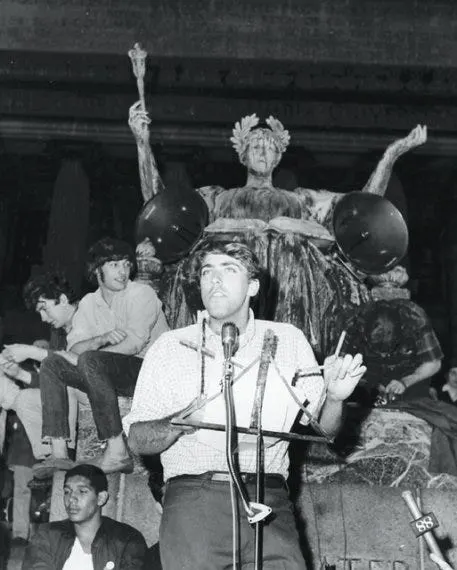
RYM members passed out a manifesto to people walking into the convention. Written by the leaders of the group, which included Mark Rudd, Bill Ayers, and Bernadine Dohrn, “You Don’t Need a Weatherman To Know Which Way the Wind Blows” laid out their whole philosophy. The title was drawn from a lyric in Bob Dylan’s “.”
RYM certainly didn’t like the way the wind was blowing after Progressive Labor took over the proceedings. Led by Dohrn, they walked out and pitched their own SDS tent. RYM then split in two itself, with one group rejecting the idea of a violent revolution. They wanted a new world order, but hoped it could be achieved peacefully.
This leftist cellular mitosis could not go on forever. The group that remained, including Dohrn, Ayers, Rudd, and others, were the ones dedicated to the struggle, no matter how tough it might be, no matter what direction it traveled. These were the Weathermen.
First known as the Weather Underground, then Weatherman, the Weathermen, effectively took over SDS and walked away with its name, its organizational structure, everything. The SDS that walked into the June 1969 convention ceased to exist. The Weathermen used the SDS structure to move beyond the college campuses and into the cities, looking for recruits and spreading the gospel of revolution. By the end of the year, the Weathermen voted to close the SDS national office, essentially shutting the doors on the organization for good.
SDS suffered an ignominious end considering the influence it held over the student movement earlier in the decade. Students for a Democratic Society mobilized campuses all over the country, coordinated demonstrations, messaging, and events for an organization that at one point counted 100,000 members.
That power was now in the hands of an organization that, in 11 months’ time, would declare war on the United States.