Nixon’s Proposal to Scrap the Electoral College

The Electoral College is the Constitutional method by which we elect our president. Article 2, Section 1 lays it all out. We elect our most powerful leader via state electors, not popular vote because America is a federal republic, not a direct democracy as so many people mistakenly assume. The Founders realized that direct election of the president would inevitably lead to certain states or regions holding sway year-in, year-out, putting a thumb on the scale that would underrepresent entire swaths of the country.
The Electoral College courts more controversy than it generally deserves, and calls for its abolition are hard to take seriously in historical context because they are often made by those who lost the last election. And those who won are not generally motivated to criticize the system that put them in office. Thus, reform proposals are often seen as partisan efforts and never gain enough traction to actually force a change to the Constitution. But what if a call to change the Electoral College was made by a president?
The 1968 presidential election was as pure a test of the wisdom of the Electoral College as had been seen in many a year before or since. Alabama governor George Wallace’s third-party campaign may have been written off by the political and social elite as just a racist run for the White House, but his was no fringe candidacy.
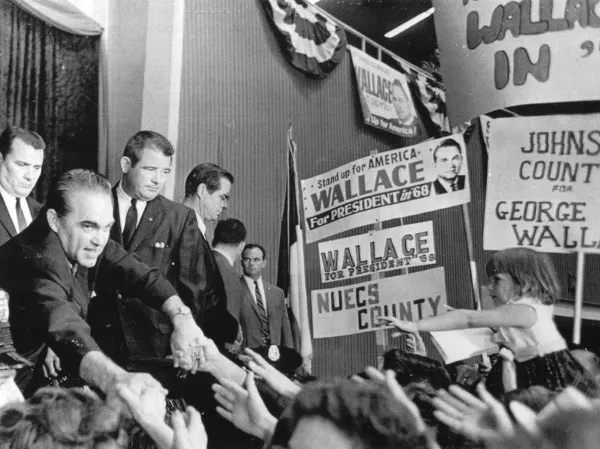
George Wallace on the campaign trail, winning hearts and minds and scaring the Establishment. Image: Getty Images.
Wallace knew that he was unlikely to seize the presidency outright running against Democrat Hubert Humphrey and Republican Richard Nixon. Wallace’s strategy was to deny both major party candidates the required 270 electoral votes, and force the election to be decided by Congress, where Wallace would presumably exercise his political will to force an outcome more to his liking, maybe giving him the vice presidency or influence in the makeup of the next presidential cabinet.
Wallace fell short of his goal, but he made enough of an impact to scare the Establishment. He won 46 electoral votes, a better showing than any other third-party candidate in American history. He also drew votes away from both major party candidates, and denied Nixon the electoral rout he was planning by pulling the Solid South away from the Democrats for the first time in generations.
Nixon believed that changes had to be made so that Wallace, or someone else later on, could not use the Electoral College to game the presidential election and sow chaos at the ballot box. He also didn’t want to leave anything to chance when it came time to run for reelection in 1972.
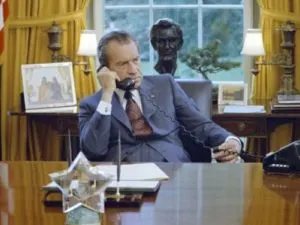
On February 20, 1969, Nixon announced a plan for Electoral College reform. He threw his support behind a plan that would lower the threshold for electoral victory to the candidate with the highest popular vote, provided they won at least 40% of the total number of votes cast. If neither of the top two candidates gets 40%, then a run-off election would be held 10 days later. This would essentially do away with the Electoral College system while reducing the chances that a three-way election would be decided by the House of Representatives.
Humphrey came out in favor of the proposal in a Los Angeles Times op-ed in April. This helped build bipartisan support, which would surely be needed to get two-thirds of both chambers of Congress and three-fourths of all the states to agree to a Constitutional change.
Democrat Representative Emanuel Celler of New York guided the proposal through the House, where it passed by an overwhelming 339–70 on September 18. Nixon again sounded his support for the measure, stating, “Our ability to change this system in time for the 1972 election is a touchstone of the impulse to reform in America today.”
With estimates predicting support by 30 state legislatures, it seemed that all that was needed was a two-thirds Senate vote to make the 40% rule the new law of the land. But a mix of Republican and Democrat Senators from the South and from small states gathered to oppose the measure because it would reduce the value of their votes and leave them to twist in the wind while the rest of the nation decided their destiny.
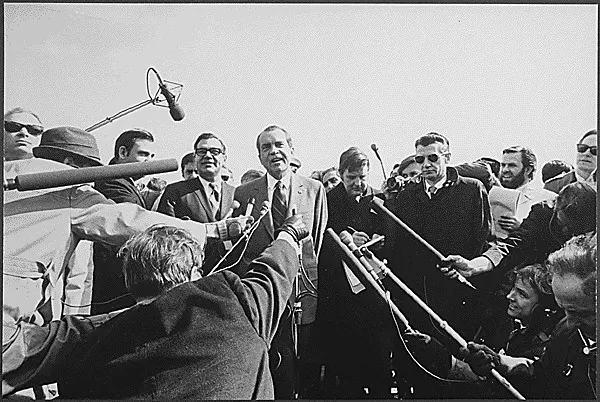
Nixon was vocal in his support for Electoral College reform. To a point.
The measure remained locked up in committee for a year, and in September 1970, it finally hit the Senate floor for open debate. The opposition organized a filibuster, which survived two cloture votes. The amendment was tabled and never brought up again.
Nixon, while not withdrawing his support, did not spend any more political capital on the effort. He did not make any more public statements about the amendment after it was introduced in the Senate. Since his primary motivation had been to keep the South from mucking up his reelection plans in 1972, Nixon may have figured it was better to pursue a different tactic than bending the Electoral College to his will.
There are still efforts to do away with the Electoral College, including a multi-state compact that circumvents the Constitution altogether. As long as people remain concerned that their votes are counted, and as long as political parties perversely convince people that their votes only count if their candidate wins, then the fight over the Electoral College will continue. But in 220 years, no one ever came closer to making the death of the Electoral College a reality than Richard Nixon in 1969.
All this year I will be looking back at 1969, the year the turbulent 60s came to an end. Subscribe now and be sure not to miss new features on that year’s entertainment, lifestyle, politics, and much more.