‘Easy Rider:’ The Road Movie as Time Capsule
The entertainment industry cranks out hundreds of films every year. Maybe it’s thousands, I don’t know. I don’t pretend to keep that close an eye on it.
But either way, with that high volume of output, the odds are long that any of those films will stand the test of time and still be entertaining audiences ten years, twenty years, or more down the road.
I hear people say that movies today are made to be consumed and forgotten. Well, yeah, but that’s nothing new. You could make that case about any era in cinema. I don’t think anyone really knows just how many movies from the 1920s, 30s, and 40s have been lost forever. And not just because they weren’t properly preserved, but because people stopped giving a damn about some of them.
True artistic achievements in cinema are rare. But a film that carries a message, sets a tone, and defines a generation in such a way that it becomes an historic touchpoint, that is indeed a gem.
Behold .
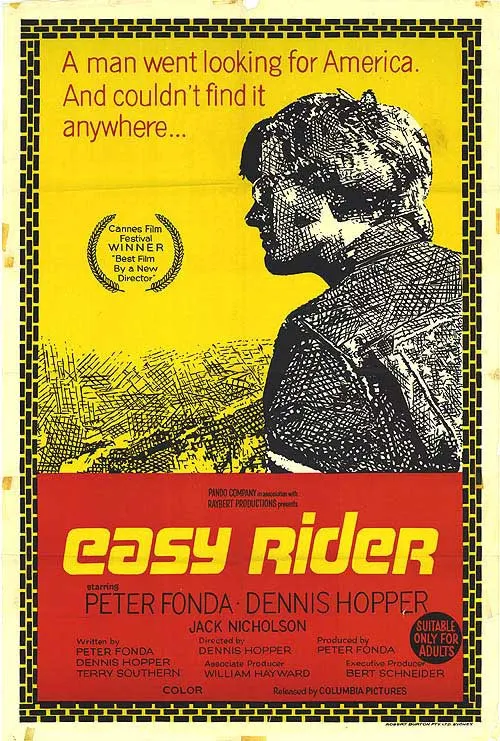
The country was in a rough place in 1969. We had reached the high point of violence in Vietnam. America’s youth did not trust anyone over 30. And most of those over 30 thought the kids were out of their minds. There was a monumental generational disconnect that made it seem for people at that time as if the world was coming to a slow, painful, agonizing end.
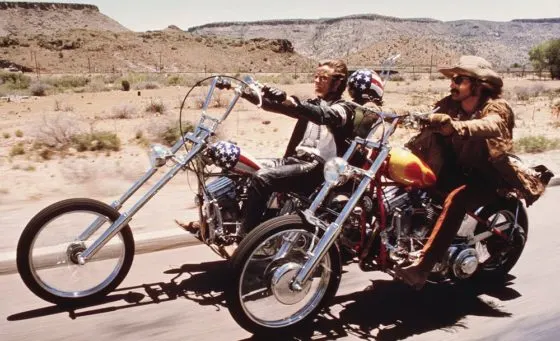
In the midst of this generational rift, along came actor Peter Fonda with an idea for a modern-day Western that traded in horses for motorcycles. Drifters on the frontier getting in adventures. A sort of bridging of the gap between the old and the new, but something meant for the young.
Fonda was the son of Henry Fonda, a Hollywood mainstay for decades. Henry was the quintessential American good guy actor. Look at some of the roles he played: Abraham Lincoln, Theodore Roosevelt Jr., Adm. Chester Nimitz (in two separate movies), the President of the United States (in two separate movies), Clarence Darrow, Douglas MacArthur.
Big shoes to fill.
But Peter had his own motorcycle boots. Fonda had made a biker flick for B-movie titan Roger Corman called The Wild Angels, which was a major hit in 1966. Legend has it that it was during the making of this picture that Fonda originally got the idea for Easy Rider.
The Corman movie, which also featured another child of Hollywood royalty, Nancy Sinatra, was really a drive-in exploitation picture, but Fonda had something a little more serious in mind.
He took his idea to Dennis Hopper. Hopper had recently been in a biker flick called The Glory Stompers. He had also appeared in a number of classic films, including Giant and Rebel Without a Cause with James Dean, Cool Hand Luke with Paul Newman, and The Sons of Katie Elder with John Wayne. Despite this pedigree (or maybe because of it), Hopper had gained a reputation as being difficult on set. But he liked Fonda’s idea.
They came up with an idea about two motorcycle drifters and named them Wyatt (after Wyatt Earp) and Billy (after Billy the Kid). They called their film The Loners and took it to Terry Southern to flesh their idea into a full-blown script.
As an aside, Henry Fonda played Wyatt Earp in John Ford’s My Darling Clementine. It is doubtful this had any influence Fonda and Hopper for the framing of the character. The names were more symbolic of a bygone American era and nostalgic for a country they believed no longer existed.
Southern was a well-established novelist and screenwriter who had worked on Dr. Strangelove, The Cincinnati Kid, and Barbarella by the time Fonda and Hopper came calling. The first thing he did was change the title to Easy Rider, a slang term for a man who lived with a woman in a no-strings-attached sort of way.
Southern gave Fonda and Hopper’s story some direction, and Fonda and Hopper went off to make their movie.
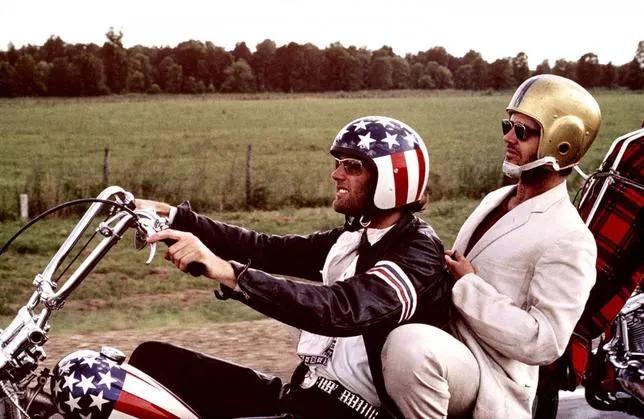
Apart from Wyatt and Billy, the only other major character in the movie who is in more than one scene is George Hansen, a drunk ACLU lawyer who joins the bikers on their trip to Mardi Gras. Hansen was originally supposed to be played by Rip Torn, but he got into an altercation with Dennis Hopper and didn’t get the part. The role went to Jack Nicholson.
Nicholson, who had also done a biker picture at one point, Hells Angels on Wheels, was known mostly for his work for Roger Corman. Easy Rider would make him a star and cement Nicholson’s status as the King of Cool. It also earned him his first Academy Award nomination for Best Supporting Actor.
The onscreen combination of Nicholson, Fonda, and Hopper, and the behind-the-scenes trio of Hopper (director), Fonda (producer), and Southern (screenwriter) was one of those fortunate moments that rarely come around in the creative world.
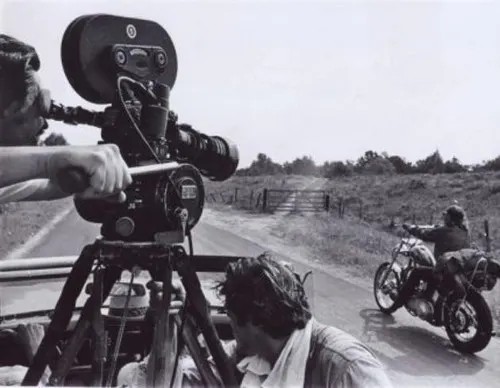
They set out to make a road movie about two men’s ambling quest to achieve the American Dream (defined here by selling cocaine to a rich buyer to raise cash to go to Mardi Gras, then Florida, buy a boat, and sail off into the sunset). They came away with a film that perfectly encapsulated the time in which the movie was made and the times they were living in, and they did it without beating you over the head with what they were trying to say. The message was subtle. Granted, it’s a pretty dreary, downbeat message considering how Wyatt, Billy, and George all turn out. But being part of the counterculture wasn’t as easy as going to San Francisco with flowers in your hair.
The movie starts off upbeat and fresh. Camera angles and edits that had not been seen before in American cinema. The brief cameo in the beginning by legendary music producer and later murderer Phil Spector as the coke buyer. Steppenwolf’s “Born to be Wild” playing during the opening credits to get the blood pumping. (It’s too bad that so few people today realize that this was the first time that song was ever used in a movie, and the only time it has ever been used effectively. It has been commercialized to death ever since.)
As Wyatt and Billy’s adventure unfolds, it becomes darker and heavier. We realize that they are outsiders looking to escape an America they don’t recognize or trust, and that America doesn’t recognize or trust them. This was a sentiment that could be easily related in 1969; a society split by conflicting ideals, divided by its inability to communicate.
Nicholson’s George Hansen serves as that rare trustworthy connection to the America Wyatt and Billy are riding through. He is a cultural translator of sorts who explains, “They’re afraid of what you represent. Freedom. But don’t tell them that they ain’t free, because they’ll get really busy killing and maiming to prove to you that they are.”
Some may argue that this is a cynical take on America, but it was certainly a valid opinion to be held at the time. The belief that America is lost was one that floated pretty close to the surface for a lot of people in 1969. It wouldn’t be a stretch to say that a lot of people share this sentiment today. Perhaps this is part of the reason why the film endures.
Dreary, pessimistic, call it what you want. Easy Rider was also fresh, exciting, independent filmmaking that clearly connected with audiences. The film earned $60 million off its $400,000 budget, making it one of the biggest and most profitable pictures of 1969. Aside from Nicholson’s Oscar nod, it was also nominated for Best Original Screenplay, a credit Southern would regrettably share with Hopper and Fonda. It’s also been officially recognized as one of the great American movies and is listed in the National Film Registry.
Easy Rider should be required watching for film lovers because of its bold approach to cinema and storytelling. But it should also be required viewing for its historical significance. If you really want to get a sense of America in the late 1960s, then this is a great place to start. It doesn’t wave a flag (discounting the ones on Wyatt’s helmet, jacket, and bike), and it doesn’t burn any either. It just is.
And what it is, is a great movie!


