We’re Going to Mars. Come to Peace with It.
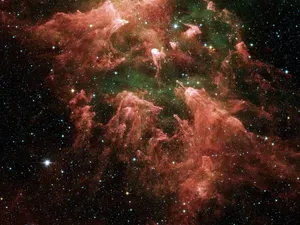
Humankind is blessed with an insatiable curiosity to understand the world around us. We are explorers always searching for that next fix, the thrill that comes from discovery, from conquering the unknown, or at least our fear of it. Our greatest achievements have come from this ceaseless drive. It is this curiosity that has allowed us to map out our world.
Now we are turning our curiosity toward the stars. For decades, we have been slowly, timidly reaching out beyond Earth’s grasp. Like a timid child dipping their toe into the water, we have sent rockets into the space around our world. We have sent probes and machines out into the solar system, to other worlds and the Sun. We have landed on the moon. And we’re making bold plans for the next big step.
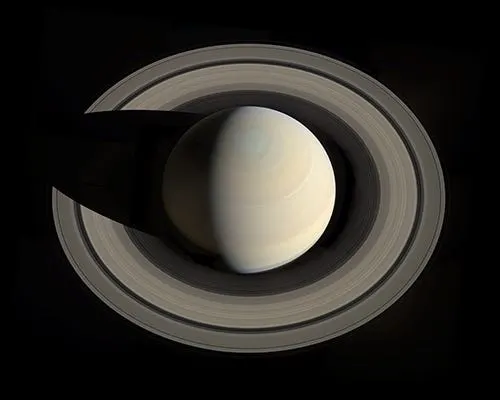
Cassini’s trip to Saturn produced great data and great images. Image: NASA.
Mars is the ultimate prize in exploration. Greater than and doing donuts in moon buggies on the lunar surface. Better than landing a probe on the moons of Saturn. Men and women walking on Mars would be the pinnacle of human achievement. It is more than just visiting another planet. It is the first steps in creating another home for humanity.
Sending people to Mars is an opportunity for the world to rally behind a new adventure that could change the future for the human race. While the Apollo program was specifically an American endeavor inspired by Cold War competition, the Mars mission will be global, welcoming the best that each country has to offer. It is a chance for humankind to expand its footprint, to no longer be Earth-bound.
New ideas and fresh perspectives arrive each day to inform the Mars mission. Government agencies and private sector organizations around the globe are working tirelessly toward that goal. As we proceed closer with each step, though, the chorus of voices against a manned mission to Mars also grows.
The naysayers, the doom-and-gloomers, the nattering nabobs of negativity (to borrow a phrase), have a whole host of reasons why we shouldn’t go to Mars. Their opinions are welcome, as are all opinions when dealing with a mission of this magnitude. Unfortunately, they’ve got it all wrong.
It’s too expensive. Cost estimates of a manned mission to Mars vary widely from $10 billion to $230 billion. Some say maybe even $1 trillion. The anti-Mars crowd says this money would be better spent here on Earth. This has been a claim against space exploration from the beginning. The federal government spends far more on Medicare, Medicaid, Social Security, and other entitlements than it spends on space exploration. NASA’s annual budget runs about $19 billion. The annual budget for those entitlements? Somewhere around $2 trillion. That’s trillion with a T. NASA’s budget is a blip compared to other government programs. You will not cure poverty by scrapping NASA. You won’t even make a dent.
You also have to consider the return on investment. Space exploration has provided immeasurable contributions to society in technology, medicine, food production, and dozens of everyday conveniences that most people don’t even realize. A trip to Mars, the first of many, will teach us about that planet and our own, help us understand the nature of the universe, demonstrate new technologies for interplanetary travel, and establish a foothold for a permanent human presence on the Red Planet.
It’s too impractical. Another anti-Mars argument is that it is too far away, it takes too long to get there, and it will be difficult to support life there. And what can humans do that the robots already there can’t accomplish? Well, as far as the distance argument goes, that sounds more like kids annoyed about having to take a long car trip. If that’s the only reason to not go, then you don’t have a reason to not go.
Yes, it will be difficult to support life at first, but there are some pretty inhospitable places here on Earth, too, and people have managed to work it out. The planet does contain all the fundamental building blocks for supporting life. It’s just a matter of tapping into them and converting them to states of matter that we can take advantage of.
Terraforming, making Mars more like Earth, is still a new science. Some say it is impossible, which is not a very confident assessment seeing as though it has yet to be tried. After all the remarkable scientific feats humans have accomplished over the last 150 years, you would think people would get tired of saying that something is impossible.
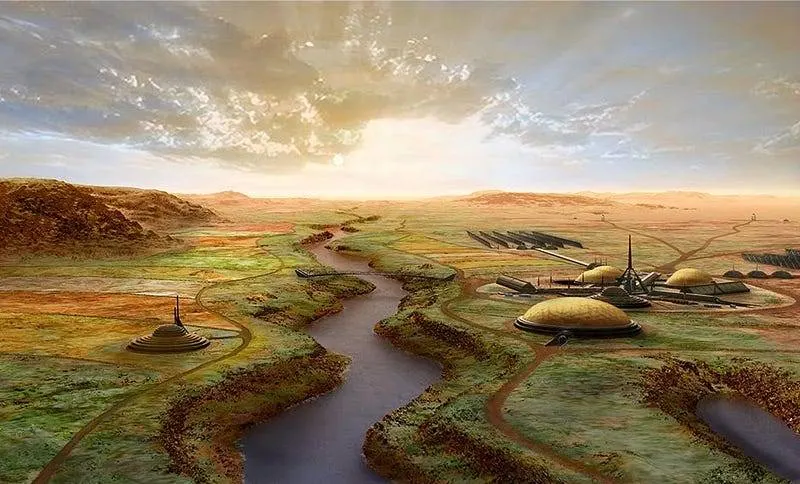
If it’s going to take hundreds of years to get Mars to look like this, then we had better get started. Image: Dane Spangler, www.HumanMars.net.
As for sending robots to do a person’s job, using robots and probes is a smart thing to do. But it is time consuming and there are inevitably things that will need a human’s quick-thinking ability and dexterity to accomplish and robots are not up to the task. Besides, we want to establish Mars as a colony for people, not robots.
It’s too dangerous. We will need to build the most technologically advanced spaceships ever conceived, travel further than anyone has ever travelled in history, be pelted with cosmic radiation, spend months in zero gravity, cope with extreme isolation, be cramped up with a handful of other people for the entire voyage, deal with the potential catastrophic failure of equipment, land on a planet that no one has ever been on before, explore it and cope with all the unforeseen things that may come up, then get off the planet and return to Earth.
So, hell yeah, it’s gonna be dangerous. Space is no picnic. Or as , “Space is disease and danger wrapped in darkness and silence.”

Danger, schmanger. How can you not want to walk here!? A composite of Mount Sharp on Mars from the Curiosity Rover, 2015. Image: NASA.
Any journey of exploration worth taking is fraught with danger. That just goes with the territory. Lewis and Clark, Columbus, the intrepid ancient travelers who went to sea in what by today’s standards were nothing more than tricked-out canoes — these people were courage personified. When it comes to exploration, squishes need not apply.
But accepting danger does not mean that we’re just winging it. Preparations for Mars are not being made on the back of a cocktail napkin. Years of thought and design and experiments have gone into the Mars project so far, and there are more years ahead before our intrepid explorers leave for the Red Planet. This will be the most well-planned, thoroughly studied expedition in human history. There is always the possibility that something could go wrong, but you can trust that nothing is being left to chance.
We shouldn’t colonize Mars. Says who? This isn’t like the age of colonization here on Earth where empires fought over new territory and pushed aside the indigenous people for land and treasure. There are no indigenous beings on Mars.
And we are much more ecologically conscious than our ancestors. We won’t be going to Mars to trash the place or to just move there and trash the Earth. The plan is for humans to exist on Mars and on Earth to double our chance for survival. If you care about humanity and you care about the Earth, then frankly you should be a supporter of establishing a footprint on Mars. It will give humanity and Earth a much better chance for survival than if we just stay here and take our chances.
To reject the idea of sending humans to Mars is to go against everything that humankind stands for. It is a rejection of our indomitable spirit, our quest for knowledge and understanding, our desire for adventure. Statements like “it’s too expensive,” “it’s too dangerous,” or “it’s impractical” are just excuses to shield the fearful from the unknown. There are no hurdles to a manned mission to Mars that are insurmountable.
Reject the fear. Embrace the adventure. And let’s go to Mars!