Mayhem and Murder at Altamont With the Rolling Stones

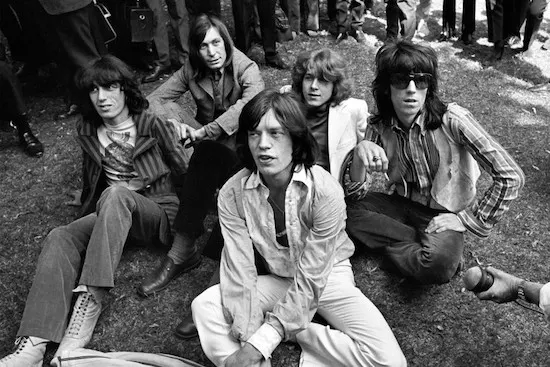
The Rolling Stones were in a good place going into December 1969. They were crisscrossing the United States on their first North American tour since 1966. Their latest album, Let It Bleed, was scheduled to drop on December 5, and their previous outing, Beggars Banquet, was a hit with fans and critics. While so many other rock bands had gotten into psychedelia and acid rock and the airy sounds of folk rock, the Stones had returned to their bluesy, crackling roots. As lead guitarist Keith Richards so eloquently put it, “I’d grown sick to death of the whole Maharishi guru shit and the beads and bells.”
It wasn’t easy for the Stones to reach this point. In fact, some people had written them off, not expecting the band to last the decade. While a string of drug arrests in 1967 and ’68 helped cement their image as the Bad Boys of Rock and Roll, the resultant legal troubles prevented them from touring the states. The death of founding member Brian Jones on July 3, 1969 was perhaps the heaviest blow to deal with, although not quite unexpected.
Jones had created the Stones. He formed the band, gave them their name, got them their early gigs, and influenced their sound. But as happens so often in the rock and roll life, the pleasant distraction of drugs and alcohol became an uncontrollable demon that ruined his life. Jones’s increasingly erratic behavior led to his departure from the band in June 1969. Not even a month later, he was found at the bottom of his swimming pool.
The Stones mourned the loss of their good friend, but life went on. With new guitarist Mick Taylor to replace Jones and a refocused creativity, the band looked forward to what the future had in store.
What that future held after 1969 meant different things to different people. From the year’s beginning, the nation’s fate seemed to be a mixed bag. The beginning of Richard Nixon’s presidency in January had just as many people celebrating as were crestfallen. He promised unity, but there was none to be had. You either loved Nixon, or you hated him.
1969 had seen the largest peace protests in American history. Anti-war advocacy had reached beyond the traditional student and counterculture populations to include average citizens. It was a remarkable thing to see for those who had dedicated their time to ending the Vietnam War. Nixon promised to draw down our troop presence in Vietnam, and he made good on that promise. But his bombing of Vietcong strongholds in Cambodia and the Selective Service draft lottery on December 1 suggested Nixon was widening the war, not ending it.
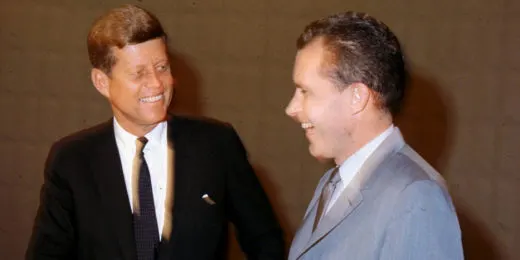
In July, we landed on the Moon, fulfilling a decade-old dare from President John Kennedy, the charismatic leader who kicked off the decade with vision and promise, but was destined not to see it through. In a year and a decade filled with so much chaos, Apollo 11 showed America at her best—adventurous, committed, and clever.
Winning the race with the Soviets to the Moon proved a fleeting victory. By Apollo 12 just three months later, many Americans had already grown bored of the affair, and the federal government started chipping away at NASA’s budget, presuming that the space show was over and that it was time to get back to earthly matters. We had set foot on a celestial body, a feat humans have dreamed of since we first crawled out of the primordial muck. But there was still a war raging in Southeast Asia. There was social unrest in the streets. Those who spoke up or spoke out, who pushed against the envelope were challenged, jailed, beat up, or shot.
As if we needed a reminder of just how far off the rails things had gone, a crazed lifelong felon had convinced the brainwashed members of his California commune to become a killing squad. Over the course of two days in early August, seven innocent people were brutally murdered so that Charles Manson could start a race war that he envisioned would destroy America and leave him to rule in the aftermath. In our modern society, where we have been systematically desensitized and shockingly comfortable with ultraviolence, the actions of the Manson Family seem almost quaint. But at the time, it was as sure as sign as any that the end was near.
Then came Woodstock. Those three marvelous, magical, and muddy days in mid-August at Yasgur’s farm were a showcase of great rock and roll music. It was also a demonstration that a person and their 500,000 closest friends could have a groovy time in the rain without adequate food, shelter, and toilets. (Clothing was optional from the start.) Even at the time, many recognized the significance of Woodstock. It was the high watermark of a generation that had spent much of the 1960s at odds with the Establishment and all it represented.
The Rolling Stones passed on performing at Woodstock. But they were open to taking part in a similar event, and got wind of a free concert that the Grateful Dead and the Jefferson Airplane were trying to put together in San Francisco. All three bands were keen on throwing an event that would reflect what had taken place in August, complete with the love, groovy music, and good times of Woodstock.
The show was set for December 6, but details like where it would take place were up in the air as late as December 4. San Francisco’s Golden Gate Park was the first location, but the city council rejected the idea, having had enough with the counterculture in the City by the Bay. Altamont Speedway, about 50 miles east of San Francisco, was finally locked in two days before the show. The slapdash affair came together so late that the stage was still under construction when the first act, Santana, started performing.
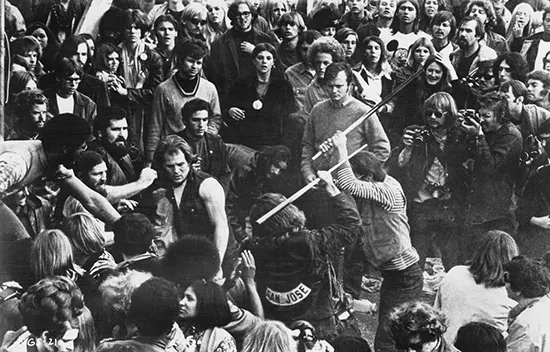
Altamont was chaos personified. There weren’t enough toilets or clean water. The only food available was what people brought with them. The local Hells Angels chapter was brought in to keep people from rushing the stage. Anyone who did got kissed with a pool cue.
The violence started pretty early. Fights broke out in the audience, which was tightly packed close to the stage. Marty Balin of the Jefferson Airplane was knocked out by an Angel when he tried to break up a scuffle during their set. Stephen Stills of Crosby, Stills & Nash was stabbed in the leg. Moments after the Stones arrived via helicopter that afternoon, Mick Jagger was punched in the face by a concert goer. The Grateful Dead, who had arrived shortly before they were scheduled to take the stage, saw how the event had deteriorated and left without performing.
By the time the Rolling Stones took the stage that night, the crowd had been whipped up into a frenzy. The heat, the booze, and getting knocked around by Hells Angels had set tempers flaring. When young Meredith Hunter tried to climb up on a speaker to get a better view of the band, he was yanked down by an Angel. Hunter shoved back, then more Angels descended on him. He pulled a gun. Hells Angel Alan Passaro stabbed him four times. When Hunter hit the ground, Angels surrounded him and beat him to death in full view of the band. The incident was captured on film because the Stones were documenting their U.S. tour for the movie Gimme Shelter.
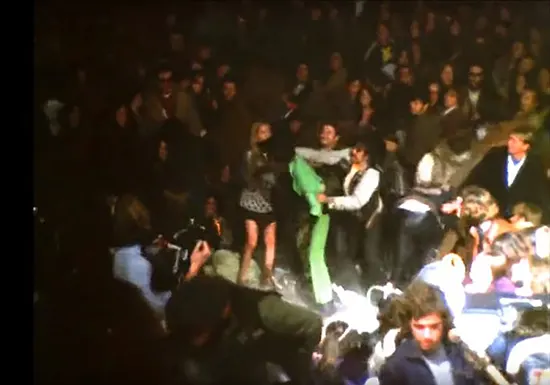
The Stones kept playing, with Jagger frequently pleading for calm. They didn’t learn until later that Hunter had died. No formal apologies were made to Hunter’s family by the band. Passaro was charged in his death, but pleaded self-defense and walked.
Meredith Hunter was one of four men who died at Altamont. Two others were killed in a hit and run, and one drowned. There were all sorts of injuries from the beatings doled out by the Angels, random fights, and bad drugs that were making the rounds. The dream of a West Coast Woodstock had degenerated into mayhem, and Altamont would forever be considered one of rock and roll’s worst days.
The Altamont concert has assumed a mythic status over the years. It wasn’t the first time someone died at a public event, and it certainly wouldn’t be the last. There was a large portion of the 300,000 attendees who had a good time. But the poorly planned event was held in sharp contrast to Woodstock, and it was a somber ending for a year, and a decade, that had begun with youthful energy and possibility.