The Kennedy-Nixon Debate — When TV & Politics Got Married
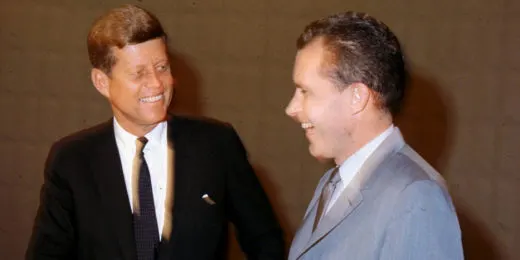
On September 26, 1960, TV and politics, after a decade-long courtship, finally tied the knot. Neither would be the same again. On that date, 70 million Americans tuned in for the first televised debate between presidential candidates John Kennedy and Richard Nixon. It was the largest audience for any televised event up to that point, and two million more people watched than would actually vote in November.
The debate, the first of four that would take place over the next three weeks, was a major event for the country. It was not only the first time two presidential candidates would face off on television, it was the first time two presidential candidates ever debated one another.
For much of the country’s history, presidential candidates didn’t even campaign for the presidency. It was considered beneath the dignity of the office to go out and stump for it. Campaigning was often done by surrogates while candidates stayed out of the limelight. It wasn’t until Franklin Roosevelt in 1932 that candidates saw the need to hit the road and campaign vigorously for the presidency.
But none had ever considered debating their opponents. Arguing about policy, attacking each other for perceived weaknesses, and mudslinging were done through well-placed supporters and newspaper editorials. An open debate with an opponent required quick thinking by candidates and could needlessly expose them to gaffes that could cost votes. Even Roosevelt, one of the savviest political thinkers in modern times, refused an invitation by Republican challenger Wendell Willkie to a debate before the 1940 election.
By 1960, a lot had changed. Television was an entrenched part of American life, with over 85% of American homes possessing a TV set. Nightly news programs brought the nation and the world into people’s living rooms in gloriously grainy black & white. There was now a sense of immediacy to the day’s events and to goings-on in the world. And the upcoming presidential election was tailor-made for this new technology.
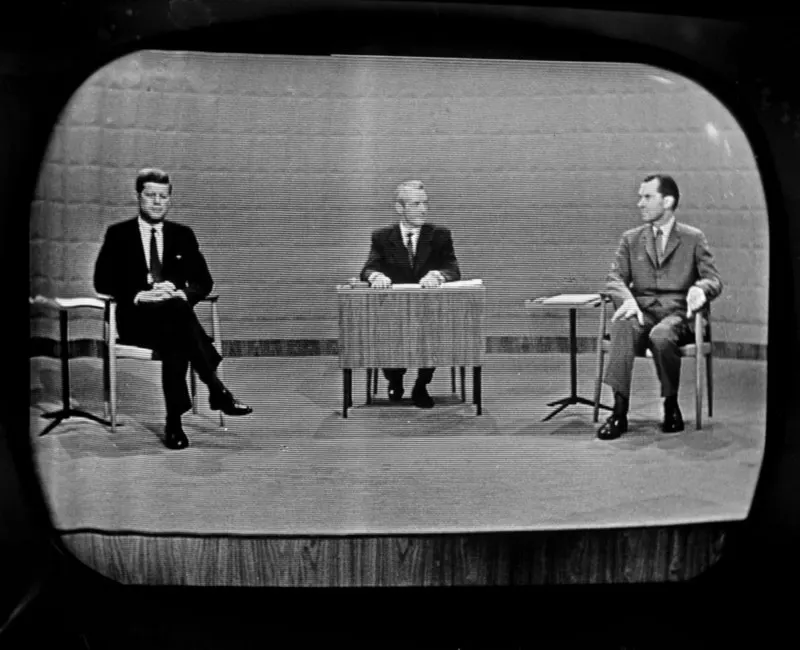
This is how you would have seen the 1960 Kennedy-Nixon debate. Image: AP.
The 1960 contest was a break from the past in many ways. It was the first election since 1920 that didn’t feature someone running for reelection. Kennedy and Nixon were the first two candidates born in the 20th century. After decades of old, grandfather types in the White House, these two men were more in line with the energetic spirit of post-war America. It seemed only right that they face off on television to let the American people decide who was more worthy of the presidency.
CBS producer Don Hewitt, who would later create the groundbreaking news show 60 Minutes, approached the campaigns about doing a series of debates in the weeks before the election. Kennedy took the debates very seriously. He peppered Hewitt with questions about the format, the studio, the cameras and lighting, what to wear, and so forth.
Nixon was more focused on his campaign schedule, and passed up a pre-production meeting to discuss the program. He had lost precious time on the road earlier in the month due to a painful knee injury, and he was comfortable that he did not need that much prep time.
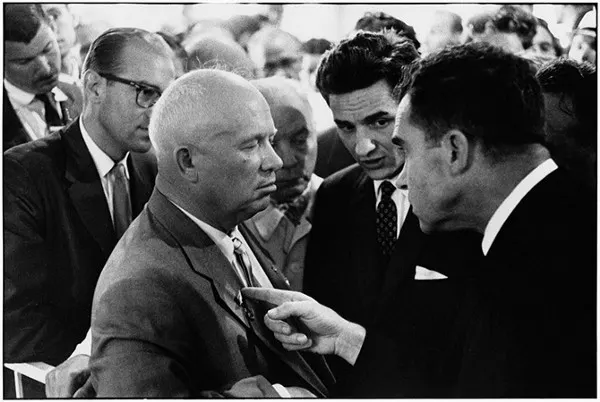
Nixon gives Khrushchev the business. Image: MAGNUM photos/Elliott Erwitt.
As Vice President for eight years, Nixon had been on television many times, and had used it to great effect in his September 1952 “Checkers Speech” and in his with Soviet leader Nikita Khrushchev in 1959. Nixon was also a skilled debater, and he possessed a natural gravitas at the podium.
The night of the debate, though, Nixon was not at his best. Still recovering from his infected knee, which he whacked on a car door on his way to the studio, he looked washed-out and tired. Kennedy came in all tan (Did that matter on black & white TV?), rested, and ready for prime time. Kennedy refused Hewitt’s offer for makeup. Nixon, not wanting to be shown up, also refused makeup, not knowing that Kennedy’s handlers had already applied it on him backstage.
What viewers saw, according to legend, is a fresh-faced Kennedy who suavely bested a pasty, stale Nixon. You can whether this is true. Truth be told, Kennedy did get the upper hand. Domestic policy, the topic of the debate, was never Nixon’s strong suit. Nixon also had the tougher job of selling the American public on his vision of progress by defending the status quo of the previous eight years. Kennedy firmly made his case for making a great country even greater.
The long-standing belief is that Kennedy won over TV viewers, but Nixon won over those who listened on the radio and could not be swayed by the Massachusetts Senator’s dazzling good looks. This anecdote took on mythic proportions over time, and it may have originated with the vice presidential running mates. Kennedy’s running mate, Texas Senator Lyndon Johnson, had listened to the debate over the radio and believed that Nixon had won the debate. Nixon’s running mate, Massachusetts Senator Henry Cabot Lodge, watched the debate on TV and thought Kennedy had won.
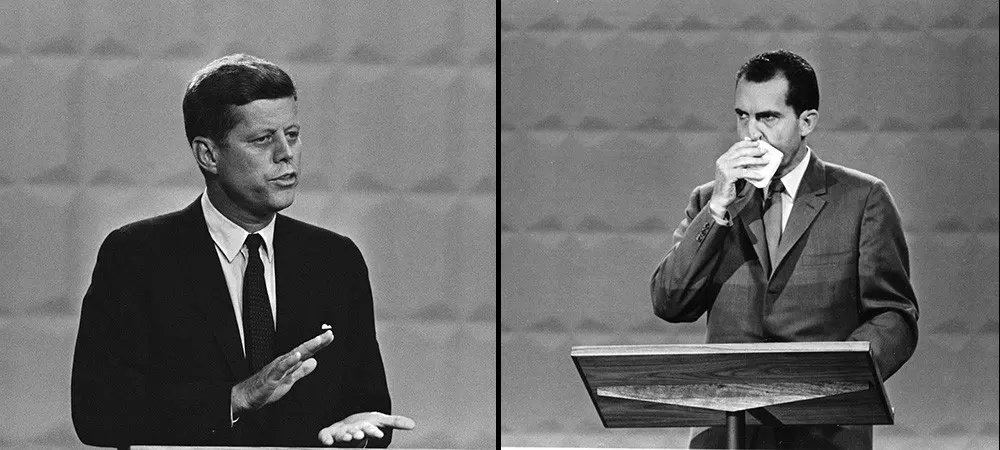
This sums up the debate in the popular imagination. Not Nixon’s best moment, but does Kennedy really look tanned to you? Image: AP.
It’s been pointed out that with so many homes owning televisions in 1960, the radio listening audience was probably concentrated in rural areas, likely poor, and not predisposed to a New England Catholic Democrat. This is one way of explaining why Nixon did so much better on radio than television, if he did in fact woo the radio listening audience. There has never been any scientific poll that accurately analyzed the radio audience for this debate.
Either way, the TV debate made an impact on the race. Kennedy was trailing Nixon in the polls leading up to the debate, but edged ahead afterward. Nixon regained his footing, though. He took the next three debates much more seriously, and bested Kennedy in two of them, with the final contest seen as a draw.
The 1960 election was so close, it’s hard to say whether TV made Kennedy or broke Nixon. Nixon refused televised debates in the 1968 and 1972 elections, though, so the experience must have made some impression on him.
After the Kennedy-Nixon debate, television would become inseparable from politics. Kennedy’s administration learned quickly to use the medium effectively, and his press conferences and public appearances became events in themselves. The men who followed him into the White House would try to manipulate television with varying degrees of success, the most successful probably being Ronald Reagan, who was an actor. Go figure.
There was no turning back after 1960. The marriage of television and politics, for better or worse, these days maybe worse, was here to stay. Politicians could no longer just be good legislators and public officials. Now they had to look good, dress sharp, master soundbites, emote, and play to the camera. As time passed, some got so good at being on TV, they forgot why they were elected in the first place.
In the beginning, it was a trade-off — TV gave us more access to our politicians so that we could be told what we need to know. Now it seems that TV has given our politicians more access to us so they can tell us what we want to hear.
Don’t forget to sign up for regular updates from Mr. Rick’s History Magazine. You’ll get cool and entertaining facts sent to your inbox every month! Have something in your email to look forward to for a change.


