‘Apocalypse Now’ or Apocalypse Too Much?
It’s not at all uncommon for a motion picture to lose a scene or two at some point between production and its theatrical release. Directors face moments when they must be merciless with their work, cutting out sections that initially seemed worthwhile for the greater good of the finished product.
These scenes can be insignificant moments that don’t advance a scene or an entire plotline that muddles the story. Many times, cuts are made to trim the length of the film. This happens a lot in the era of multiplex cinemas. A longer film means fewer showings per day means fewer ticket sales.
In the grand old days of moviemaking, such deleted material was often lost forever. The advent of home video, however, gave rise to the movie lover’s dream: the Director’s Cut. This gave us a chance to see our favorite flicks as the director originally intended, before studio suits and boring, conventional storytelling forced them to put their masterpieces under the knife.
The results can be striking and add to the richness of the film. But not always.
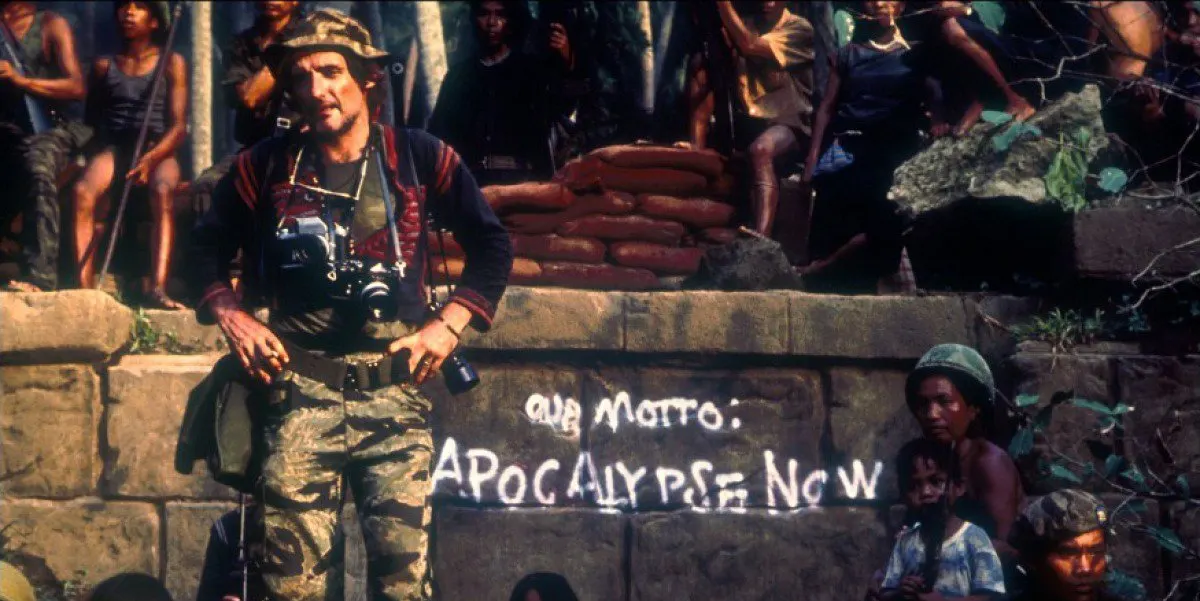
Take, for instance, Francis Coppola’s Apocalypse Now Redux.
(If you’ve never seen Apocalypse Now, stop here, see it, then come back and finish this article. Thanks.)
Apocalypse Now Redux was originally given a limited release in theaters back in 2001 before making its way to DVD. It is 49 minutes longer than the original 1979 release. That’s a lot of additional material. For an avid cinephile (okay, film geek) like myself who adored Apocalypse Now maybe a little too much to be normal, getting a fresh hour of footage was like getting a plane ticket to Valhalla.
Then I saw Redux, and my plane crashed.
Virtually every one of those extra minutes detracts from the impact of Coppola’s original vision. A comparison of that epic with this re-tooled version is a true lesson in filmmaking in that it demonstrates two basic rules of cinematic storytelling — always be advancing the story and never repeat a point that can be clearly told in one scene. The added material of Apocalypse Now Redux breaks both these rules repeatedly.
Coppola’s original Apocalypse Now is a true film classic that used Joseph Conrad’s Heart of Darkness as a framework, and the Vietnam War as a backdrop, to deliver an allegory on war and man’s deepest primal fears and rages.
The story of the making of this masterpiece is the stuff of Hollywood legend. The three-year production nearly bankrupted United Artists, almost ruined Coppola’s career, and damn near killed Martin Sheen.
The fabulous documentary of the production, Hearts of Darkness: A Filmmaker’s Apocalypse, details all the drama that went into the making of the film. In fact, it’s almost as good as Apocalypse Now itself.
Besides detailing the trials and tribulations of Coppola and company in making the film, the documentary also explores the sequences that were cut and why. So, I already had a sense of what I was going to see in the jacked-up Apocalypse Now re-release. And I was very curious about how it would all play out.
I discovered the hard way that Coppola was right to pluck this material out of the original release. The added scenes skew the context of the moments that take place before and after them in the original film and lessen their impact.
Take for example the extended material of the sequence with Colonel Kilgore, the original surf Nazi. After he delivers his famous “I love the smell of Napalm in the morning” speech, the added shots include his continuing harangue to get Lance to surf with his boys, who are under mortar fire just offshore. Sheen’s Captain Willard spirits Lance away to their boat, stealing the Colonel’s prized surfboard along the way, much to the delight of the boat’s crew.
This is an unnecessary moment because it suggests a bonding between Willard and his escorts upriver, a bonding that never takes place. In the original release, the boat crew is distrustful of Willard, and the further they travel with him, the more they blame him for the events that transpire.
This conflict is essential to the story. It shouldn’t be lightened by a prank more worthy of Capt. Pierce the doctor from MASH than Capt. Willard the assassin from Apocalypse Now.
A similar incident of misdirected bonding takes place later on when the boat comes to a way-station demolished by a typhoon. The tattered muddied encampment is home to crazy soldiers running around with no commander and no clothes. But the camp does have the Playboy Bunnies who end up in this hellhole after their disastrous USO stop back downriver. Willard works out a deal with their smarmy manager to give the boat crew time alone with the Bunnies in exchange for the fuel needed to get the Bunny chopper back to civilization.

The macabre bits that follow bring the narrative to a screeching halt to focus on Lance and Chef with their respective dates. Chef tries to pose his chatty, bird-loving babe in the exact pose in which he found her on Playboy’s pages. Meanwhile, Lance wordlessly paints his girl up in camouflage paint. She is unreceptive to his sexual advances until they accidentally knock over a casket, spilling its grisly contents. At that point she is significantly warmed up to give Lance what he desires.
This whole segment seems little more than an excuse to put some women and sex into the film. It played long, was sad to view, and pretty repulsive to experience.
Then comes the French plantation sequence.
Truly belonging in the “what-the-hell-was-he-thinking” file, this 20-minute overture to the history of the Vietnam conflict from French Indochina up to the Tet Offensive was far too dialogue-heavy. The original release up to this point was so visually striking and emotionally gripping that the viewer is just in awe of what they are seeing play out on screen. But this sequence drops all that in favor of a force-fed history and politics lesson.
After Mr. Clean’s death, Willard and company come across a French plantation that is still occupied, and they are invited to dinner. This group is staunchly entrenched on the colonial plantation they’d maintained since long before their countrymen got their butts handed to them at Dien Bien Phu.

There is a long-winded political monologue that explains why the French should have stayed (because they rightfully claimed other people’s land) while the Americans have no reason to fight at all (containing Communism by propping up a corrupt government that nobody supports).
This whole bit about considering the history of our tragic folly in Southeast Asia seems to play well in hindsight, which is probably why Coppola reinserted it. However, the original film itself makes that argument clearly without the pages and pages of dialogue. It is redundant to stop the gathering momentum of the film just to reiterate it.
The final capper on this sequence is Willard’s night of opium-induced romance with the widow of one of the French soldiers before he makes the final leg of his journey upriver to meet Kurtz.
Watching all the Redux material is like rubber-necking a car wreck; only the truly curious should even attempt it. And if Apocalypse Now Redux should exist at all it would be best served in a 2-disc DVD package where you can enjoy the original alone in all its glory and venture into these sequences for curiosity’s sake.
If you have never seen Apocalypse Now (and I hope you have, otherwise I’ve just spoiled the hell out of it for you), don’t let Apocalypse Now Redux be your first exposure to the classic. You will only be left disappointed and wondering what all the raves were about.
One last thing which you may already know: “Redux” is pronounced “re-do,” not as it is spelled. I found that out the hard way, looking like a rube in front of my more cultured friends. After I saw it, though, I was more comfortable with just calling it Apocalypse Too Much.


