The Apollo Machine
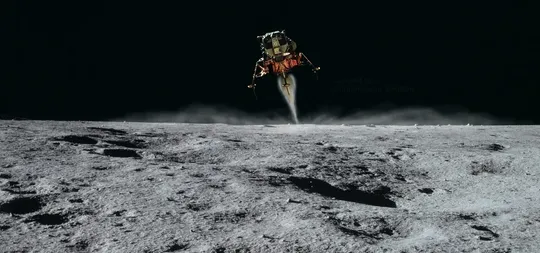
The historic success of Apollo 11 in July 1969 demonstrated what could be made possible by dedication, ingenuity, and good old fashioned American grit. The challenge President John Kennedy laid before the country in 1961 to land a man on the Moon within the decade was viewed by some as a political stunt or just another attempt to prove how much better we were than the Soviets.
Call it what you want, but it worked. By mid-1969, the Space Race was over and America was the victor. Or at least the victor if you considered the Space Race to be confined to which country would be the first to send men to the Moon.
The Soviets gave up their manned Moon program earlier in the year after suffering one failure too many. Cost overruns, technological hurdles, bureaucratic incompetence, and political meddling proved the Communist superpower wasn’t up to the challenge. Instead, they focused on near-Earth orbital operations and sending probes to Venus and other planets. These were two endeavors at which the Soviets proved remarkably adept. But exploring the Moon would be left to the United States.
The Apollo missions went ahead as scheduled. On November 14, 1969, Apollo 12 lifted off Launch Pad 39A at Cape Kennedy at 11:22 a.m. Eastern Time. It was by all accounts a crappy day, cloudy and rainy, but not crappy enough to postpone the launch. It was just crappy enough, though, for the Saturn V rocket to be struck by lightning at 36 seconds and again at 52 seconds into the flight. The strikes overloaded the fuel cells and knocked out the rocket’s telemetry. The booster’s first stage continued firing, though, and after the craft reached its parking orbit with the capsule’s electrical systems in perfect working order, Mission Control elected to continue the mission as planned.
The crew consisted of Commander Charles “Pete” Conrad, Command Module pilot Richard Gordon, and Lunar Module pilot Alan Bean. It was their third, second, and first trips into space, respectively. It was the sixth Apollo flight and the second mission to the Moon. The Command Module was designated Yankee Clipper, the Lunar Module was called Intrepid.
Apollo 12 reached the Moon on November 19, performing 14 orbits before Intrepid disengaged and descended to the lunar surface with Conrad and Gordon on board. They landed in a place called the Ocean of Storms, about 950 miles west of the landing site for Apollo 11 four months earlier.
Among the tasks performed by the Apollo 12 crew were lunar surveying, collecting soil samples, evaluating human working capabilities in the lunar environment, and deploying scientific measuring equipment. They also collected the camera and other equipment from the Surveyor 3 probe, which soft-landed on the lunar surface in 1967 about 600 feet from their landing site. The probe was designed to study the soil for future manned missions, but it had stopped working many months prior. Scientists on Earth were eager to see what exposure to the elements had done to its components.
The astronauts brought a color television camera to film their activities on the lunar surface. This would have greatly enhanced the images people saw on Earth compared to the grainy monochrome images sent by Apollo 11. Unfortunately, during setup, Bean accidentally pointed the camera at the Sun and fried its components. The images that were captured during the mission were taken with a 16mm movie camera and additional photographic equipment.
Apollo 12 returned to Earth on November 24, and the mission was rated a success. It appeared as if NASA was quickly getting the hang of this Moon mission thing, and Apollo missions were scheduled to go up every four months up through Apollo 20. Apollo 12 didn’t receive the same level of fanfare given Apollo 11, however, and it seemed as if people were already getting used to sending men to the Moon.
It was only the second landing, but one person told the New York Times on November 20, 1969, “It’s old hat, it’s not like the first time.” How quickly we get used to, even bored with, our accomplishments. American culture loves to celebrate firsts, conquer frontiers, and break boundaries. Nobody gives much thought to the second in line, and our competitive spirit has taught us to believe that being second sucks. Going to the moon once was magnificent. Going twice was okay. Going three or more times became a snooze-fest for many, even though each mission established milestones that raised the bar for its successors.
Traveling to the Moon was far from a routine exercise, as Apollo 13 would remind us in April 1970. But the razzle dazzle and overwhelming American pride of Neil Armstrong and Buzz Aldrin hopping around on the lunar surface was behind us. A lot of folks lost interest quickly in everything that followed with the Apollo program. Many young people were preoccupied with the Vietnam War. They made no distinction between the government’s involvement in space exploration and its prosecution of the war, and to them technology used in space and in warfare were one and the same.
The “successful failure” of Apollo13 buoyed moods temporarily, but the shootings at Kent State University just weeks later jarred Americans back into thinking that they had no right to be happy about anything. The smooth-running Apollo missions that followed drew progressively smaller audiences, to the point that by the time Apollo 17 reached the Moon in December 1972, network news shows had stopped doing live, uninterrupted broadcasts from space.
Outside of NASA, the federal government was losing interest in Apollo as well. By January 1970, Apollo 20 was scrapped so that the Saturn V rocket booster could be repurposed as a crew module for the upcoming Skylab orbital observatory. Later in the year, Apollo 19 & 18 were also scrubbed with the space agency citing a change in priorities motivated mainly by shrinking budgets. Congress and much of the public had seen enough of the Moon, and it was time to move on to other things like the Space Shuttle program.
There have always been people who believe that space exploration is a waste of money and a distraction from pressing Earth matters, and they were certainly around in the 1960s at the height of Apollo. The investment in the program has been returned many times over in the technological benefits we enjoy every day. As science fiction author and lifelong space advocate Arthur C. Clarke said at the time, “I think in the long run the money that’s been put into the space program is one of the best investments this country has ever made. This is a down payment on the future of mankind.”
A completely agreeable sentiment, but I am more partial to Ray Bradbury’s comments during the same period. “We have reached for the stars. And you refuse to celebrate? To hell with you!”
We’ll soon return to the Moon, but it will be after a 50-year absence. If we had never stopped sending missions there, we would probably have a fully functioning city on the lunar surface by now. The Apollo program taught us many things about the Moon, Earth, and space travel in general. One legacy we should never forget, though, is to never get comfortable with success and always continue reaching for the stars. Always.