Cracking the Myth of Joseph McCarthy
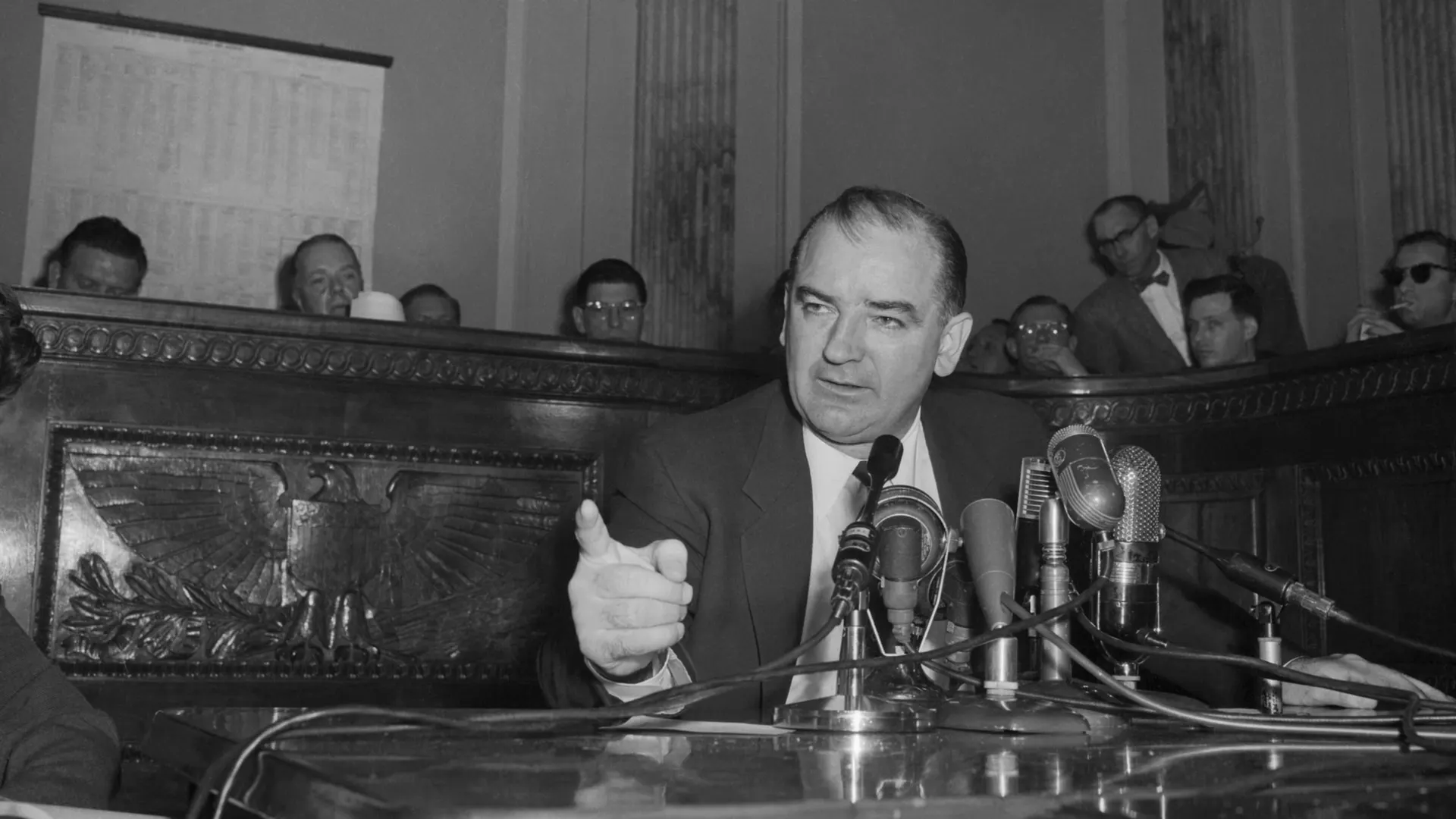
When Joseph McCarthy died on May 2, 1957 at age 48, there was no great outpouring of grief about a man who was taken from us too soon. In fact, many probably thought he was taken not soon enough.
Joseph McCarthy didn’t do his legacy any favors. In his lifetime, he made his name synonymous with all that is evil about politics. As a U.S. Senator in the 1940s and 50s, he exhibited some of the worst qualities that can be possessed by an elected official. He abused the power entrusted to him by the voters and the Constitution. He lied and cheated to achieve desired results in short order. He browbeat, cajoled, insulted, and bullied his opponents.
McCarthy’s overzealous pursuit of communist infiltration in the U.S. government has been crystalized in history as a prime example of power’s ability to corrupt those who wield it. It is not hard to make the case that he deserves to be vilified for his actions.
Joseph McCarthy also deserves to be examined with a clinical eye like any other historical figure, removed from passions and opinion, and given his day in court, so to speak. If we insist on looking at Joseph McCarthy as a cliché black-hat-wearing villain twirling his mustache, then we run the risk of missing the real lesson to be learned here.
With that in mind, here are some items of note that are worth repeating for the sake of the historical record.
McCarthy was eager to jump into public service at an early age. Growing up in a large farming family in Wisconsin, he earned his law degree and later ran for public office. He defeated a 24-year incumbent and was elected as the youngest circuit judge in state history. He tried to slice through the thick backlog of cases by expediting them, drawing controversy from attorneys and fellow jurists for his fast-food approach to his judgeship. By some accounts, he was seldom reversed by the State Supreme Court. Others, however, maintain the high court reversed him more than other judges.
McCarthy’s military service during World War II has been treated by many biographers as a means of boosting his political career. Still, it’s worth noting that he could have avoided going to war altogether because his role as a judge exempted him from the draft. He joined the Marines and earned the rank of captain by the time he left the service in 1945.
It was during the war that McCarthy’s cagey behavior began to surface. He overstated the number of aerial missions he flew during the war so that he could earn the Distinguished Flying Cross. He also claimed that he broke his leg as a result of a combat-related plane crash. In reality, he broke it in drunken revelry during a party.
McCarthy, who grew up a Democrat, ran as a Republican for the U.S. Senate in 1946. He defeated three-term incumbent and progressive standard bearer Robert La Follette Jr. during the primaries. He then went on to win the general election handily as part of the post-war sweep that (briefly) brought Republicans back to power in Congress after 14 years in the minority.
McCarthy demonstrated solid political skills during his early years in the Senate. He actually proved to be a political moderate on labor and economic issues, if you can believe that.
It was a speech McCarthy gave to the Republican Women’s Club in Wheeling, West Virginia in early 1950 that got the whole anti-commie ball rolling. He railed against the State Department for coddling communists and claimed to have a list of 205 names of known members of the Communist Party.
A lot of people believe that this was the beginning of the Red Scare, that McCarthy invented the idea of the communist menace for political gain. He didn’t invent it, although he did cash in on the trend to score political points.
The anti-communist movement in America was already under way by the time McCarthy spoke to the fine ladies of West Virginia. He had nothing to do with the Hollywood blacklist. The House Un-American Activities Committee hearings on communist infiltration in Hollywood had begun in 1947. Nor did McCarthy have any hand in uncovering the spy ring that gave the Soviets our atomic secrets or in sending Julius and Ethel Rosenberg to the electric chair.
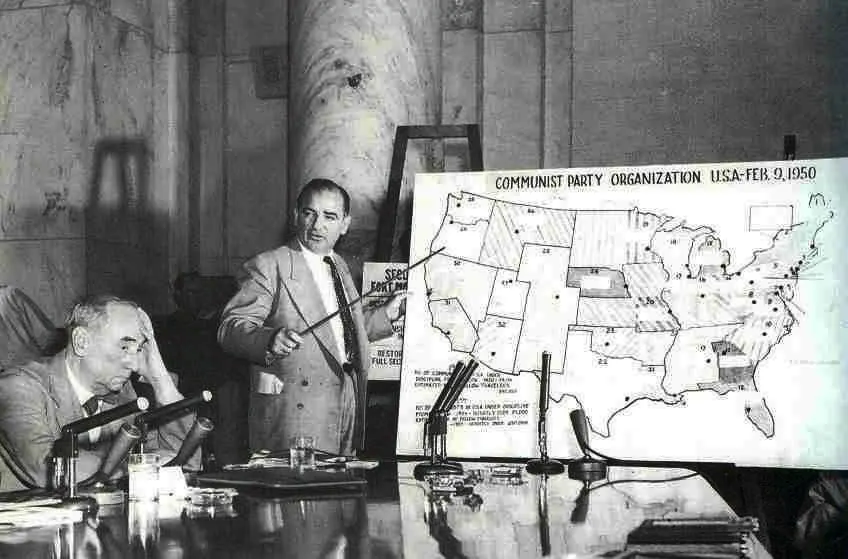
In fact, if the case is to be made that McCarthy was a political opportunist, then it must be assumed that he acted to expose communist infiltration in the State Department because he saw what was already going on in other places and took it to the next level.
Truth be told, though, communist infiltration in American institutions was a real thing in post-war America. McCarthy’s brazen and despicable actions aside, there really were communist spies in the State Department, in the military, and other areas of the U.S. government. Declassified documents from the former Soviet Union and the U.S. prove it.
The extent of the infiltration may never be defined. There are still a number of documents related to that era that remain classified, and others that have probably been destroyed.
None of this is meant to exonerate or ameliorate McCarthy’s actions during his pursuit of communists in the State Department. His work may have begun as a noble cause, but somewhere along the way his crusade mutated into a witch-hunt that destroyed lives.
McCarthy’s charges drew the media spotlight, and he did whatever he could to stay in it. When asked how many names were on his infamous commies list, he frequently gave different numbers. He never divulged his sources, and at times it seemed that any federal government employee could land in his crosshairs.
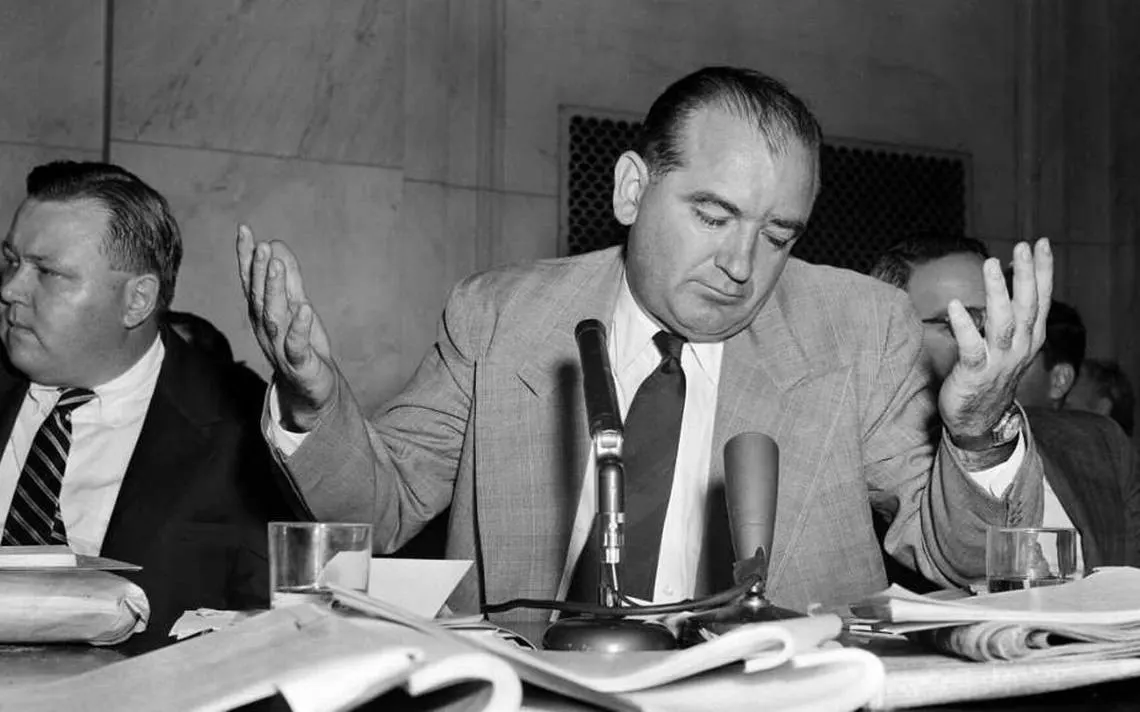
This may have been a calculated strategy to keep people guessing as to his next move, but alcohol may have also had something to do with it.
McCarthy was always a heavy drinker, but as time went on and he became the point man of the anti-communist struggle, his drinking grew worse. There was many a time when the Distinguished Senator from Wisconsin was spotted sauced beyond recognition.
During his first term in the Senate, no one made a big deal about it. In fact, no one really felt comfortable criticizing McCarthy for anything. People feared him. They either stayed out of his way or did their best to go along with him. Either option was better than becoming the target of his increasingly antagonistic investigations.
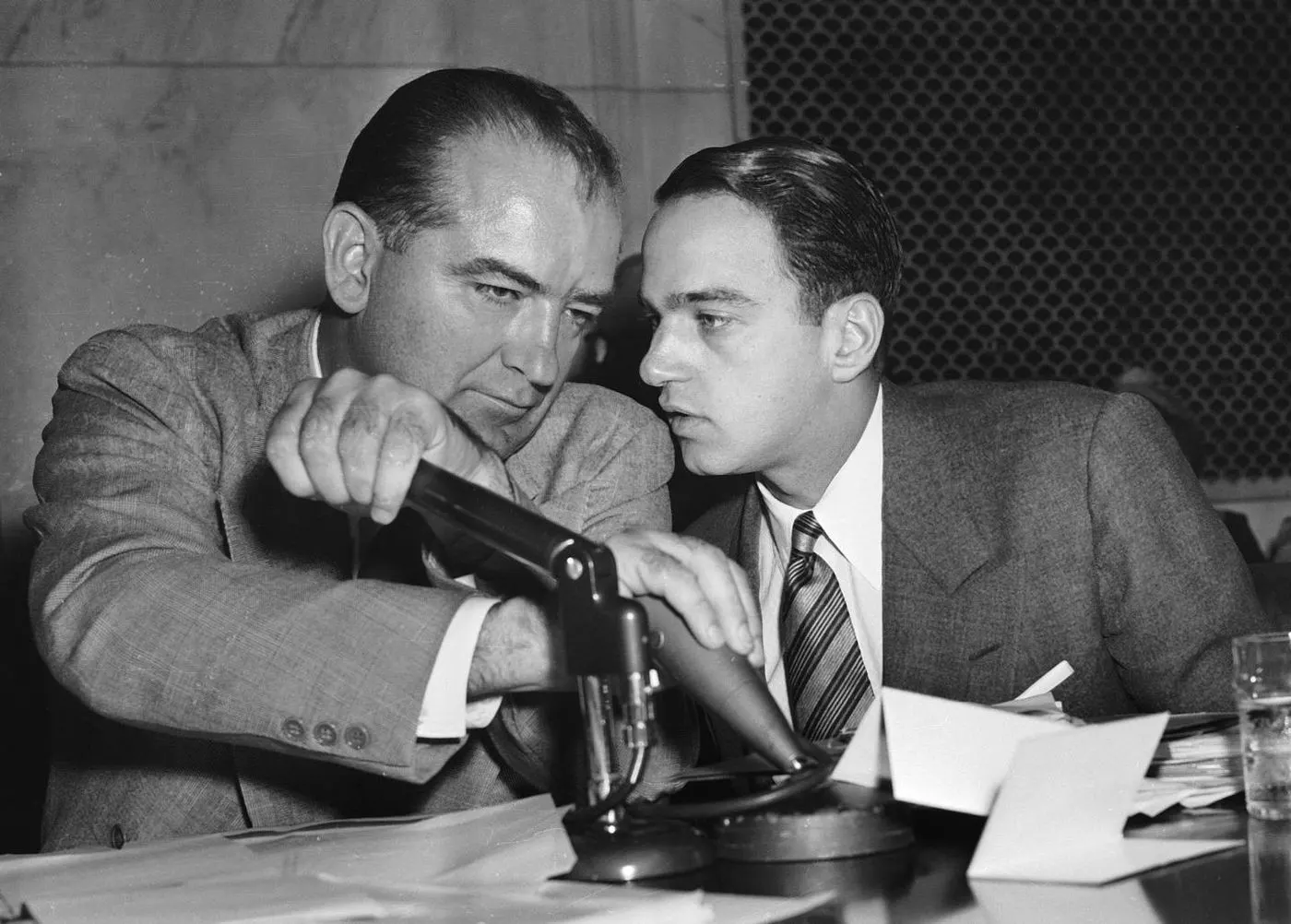
It also helped McCarthy to have friends in high places. Among his supporters was none other than Joseph Kennedy Sr., another staunch anti-communist who supported McCarthy’s efforts and took a liking to the fellow Irish Catholic. McCarthy got so chummy with the Kennedys that he dated two of Joe Sr.’s daughters and took on son Robert as an attorney for his Senate committee. Fellow Senator John Kennedy was also a supporter of McCarthy’s anti-communist crusade, although he did he best to keep from becoming too closely linked to the Wisconsin firebrand.
After being reelected in 1952, McCarthy’s act started to grow old in the halls of power. His losing battle with the bottle coincided with his amped up charges against government and military officials. Some of his early allegations of communist infiltration had merit, but it was becoming increasingly apparent that he was losing his grip.
McCarthy’s investigations lashed out in every direction. In his view, just about everyone in power was soft on communism and therefore of questionable character. Presidents Truman and Eisenhower, Secretary of State George C. Marshall, the United States Information Agency, the Voice of America, even the U.S. Army were all subject to his withering attacks.
In early 1954, McCarthy had finally gone too far. He was openly challenged by Army lawyer Joseph Nye Welch, who famously much of the nation had been too afraid to pose: “Have you no sense of decency, sir, at long last? Have you left no sense of decency?”
It turned out the answer was no.
Edward R. Murrow devoted a whole episode of his news program “See It Now” to McCarthy on March 9, 1954, using McCarthy’s own words to demonstrate the Senator’s abuse of power and the danger he posed to free speech and American democracy. McCarthy appeared on the program on April 6 to respond to Murrow’s accusations. In doing so, McCarthy accused Murrow of disloyalty to the country, which was not a bright thing to do considering Murrow’s popularity with the public.
McCarthy was censured by the Senate on December 2, 1954 by a vote of 67–22 for acting “contrary to senatorial ethics and tend[ing] to bring the Senate into dishonor and disrepute, to obstruct the constitutional processes of the Senate, and to impair its dignity.” Senator John Kennedy did not vote; he was having back surgery that day. He later avoided making any comment on the matter.
McCarthy kept his seat, but the final years of his career were of no import. He steadily and resolutely drank himself to death, downing full tumblers of straight booze to the bitter, painful end.
Joseph McCarthy could have been credited with raising awareness about communist infiltration in the U.S. government. He could have been considered a patriot for protecting America from foreign subversion. He could have been thought of as a hero during the Cold War.
Instead, Joseph McCarthy is remembered for ruining American lives in his zealous, no-holds-barred attack on communism. He is a symbol of the excesses of power. He is a reminder of the price we pay when we choose to give up freedom in the name of security. And for that, his place in history is assured. Not as a demon, but just a man. A deeply flawed man who lost his way and succumbed to the trappings of power.