Nixon Vietnamizes the Vietnam War

In May 1969, President Richard Nixon found himself under increasing public pressure to bring an end to the Vietnam War. He pledged to find an honorable peace, even though few seemed quite sure what that looked like. His campaign boast of a secret plan to end the war impressed enough voters to get him elected, but five months into his presidency no such plan had become public.
In fact, things had gotten worse. In April, America passed two milestones that were nothing to brag about. On April 3, American casualties in Vietnam surpassed those in the Korean War, making Vietnam the fourth deadliest conflict in American history. At the end of April, the number of American troops in South Vietnam reached a peak of 543,000.
On May 10, American forces engaged the North Vietnamese Army in South Vietnam’s A Shau Valley near the border with Laos. Over the next nine days, the battle earned the grisly nickname Hamburger Hill for the high number of American casualties suffered in taking an enemy position that was later abandoned for having no lasting strategic value.
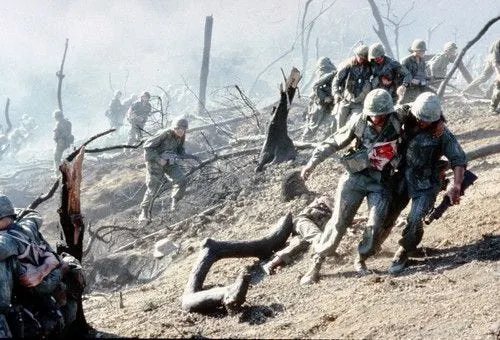
Hamburger Hill was symbolic of the chaos, the waste, and the futility that a growing number of people were associating with the Vietnam War. There were still those who wanted to see America victorious in Southeast Asia, and Nixon knew he still had broad support among middle class voters. But the president also knew that support wouldn’t last unless some changes were made, and fast.
Nixon did not believe that America could win the war in Vietnam on its present course. The North Vietnamese had been fighting for decades, and the price of victory for the United States was greater than the American public was willing to pay. But the president did not believe a unilateral withdrawal would work either. Such a move would lead to a massacre in South Vietnam. It would also signal to friend and foe alike the world over that America was a fair-weather ally that could not be counted on for the long haul. The Soviets and the Chinese would use such a move to press their advantage to forcefully spread communism around the world.
Instead, Nixon wanted to boost South Vietnam’s ability to defend itself against the North Vietnamese Army and the Vietcong guerillas. It was for this reason that Nixon expanded the war into Cambodia in March, bombing NVA sanctuaries along the Ho Chi Minh Trail. By cutting supply lines to the enemy, the South Vietnamese stood a better chance at defending themselves.
The overall strategy of handing the baton off to South Vietnam was referred to as Vietnamization. In other words, giving the Vietnam War back to the Vietnamese to fight it themselves.
On May 14, Nixon went on to lay out his vision for bringing the war to a close. He told the American public that the U.S. would not pursue a purely military victory. America would also reject any attempt by the North Vietnamese to push a peace plan that amounted to little more than American defeat. Instead, America wanted South Vietnam to have the power to choose its own future, even if that ultimately meant reunification with the North.
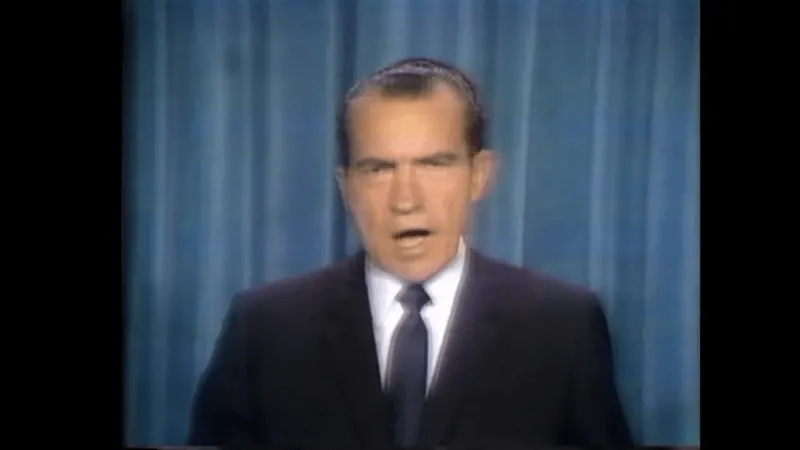
Nixon also pledged to begin withdrawal of American forces from Southeast Asia, provided North Vietnam was willing to do the same. Of course, the North Vietnamese never indicated interest in any outcome except for the complete and total unilateral withdrawal of U.S. forces. Nixon had no intention of committing to that, but in the end, that’s pretty much what he did.
America began withdrawing U.S. troops from South Vietnam later in 1969 publicly because it was a show of good faith. Privately, political pressure to start winding down the war was too great to be ignored. The hope was that while America drew down its forces, American training and supplying of South Vietnamese troops would bring them up to a level in which they could effectively face the NVA on the battlefield on their own.
As National Security Advisor Henry Kissinger described it later, “We would be in a race between the decline of our combat capability and the improvement of South Vietnamese forces — a race whose outcome was at best uncertain.”
Uncertainty was the only certainty when it came to Vietnam, so from that perspective little had changed. But Nixon’s plan to Vietnamize the Vietnam War had begun. And many Americans would now count on it to lead us out of the wilderness.