The Cult of Columbia House
If you were a fan of music in the 1970s, 80s, and 90s, then chances are you were a member of Columbia House at some point. This mail order distributor of music for the masses was the cheap and easy way for music lovers to build their personal collections in the days before digital streaming put everything in the world instantly at your fingertips.
Columbia House began in 1955 as a way for Columbia Records to market and sell their artists outside of stores. Mail order was common practice in those days, and Columbia House perfected the process. They began by selling vinyl records, and later adapted to offer other formats as they became popular — cassette tapes, CDs, even 8-tracks. (For those of you asking, “WTF is an 8-track?”, Ars Technica has the low-down.)
There were a number of record companies selling music through the mail, and RCA and Capitol Records were Columbia House’s chief rivals. Each mail order house would only sell records from their own label, so if a consumer wanted to be hip and have all the latest hits, they would have to be a member of several different clubs to keep up.
Columbia House cut through the clutter by making deals with other record labels like Warner Brothers, Mercury, and so forth to feature their artists in Columbia House mailers. Before long, this wider selection made Columbia House the undisputed heavyweight champ of mail order music.
Joining the club was easy. In fact, it was kind of hard not to join. Columbia House advertised in virtually every major magazine in America, from Good Housekeeping to Time to Field & Stream. And for those who didn’t subscribe to magazines, quarterly regional mailers went out to random households that somehow left their address on a credit card form or major hotel registry.
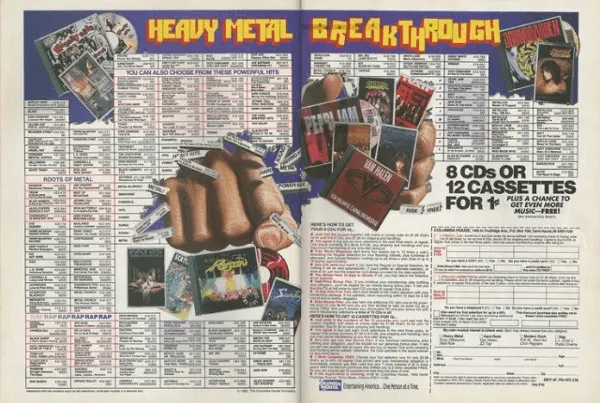
Targeted marketing ensured that headbangers got the right mailer. Image: Sony.
Columbia House was EVERYWHERE. And they were able to tailor their mailings based on the demographic information that was available at the time. Based on where you lived and what you read, you might get a mailer that featured the House’s rock & roll, country & western, classical, or gospel music selections.
It was an offer you couldn’t refuse. 11 records or tapes for a penny. When the House got hip to CDs, the deal became 8 for a penny. You were obligated to purchase two or three albums at regular price over the next year or two. Sometimes they even sweetened the pot by letting you take your first album under the agreement at half price upon joining.
The hook came with the monthly selections. Each month, the House would offer a “selection of the month” based on your musical taste. You had until a certain date to refuse the selection. If you did not send back your card checked “not interested” by the date, the selection was sent to you automatically and you were billed for it. In the mail order world, this is referred to as negative option billing.
This was one of the ways the House was able to make money. They counted on people being too lazy or disorganized to send back the form in time, and knuckling under once they already had the album in their hands. Not surprisingly, there were a lot of people like that running around.
Another way Columbia House made money was to press their own versions of popular albums from master tapes purchased through licensing deals with major music publishers. This cut down on the cost of buying the albums from the record companies. The House also neglected to sign licenses with some record companies to sell their albums. Instead, as Ethan Trex at Mental Floss points out, Columbia House would just send the music publishers 75% of the standard royalties. “The clubs argued that since the publishers were cashing their discounted checks, they were submitting to ‘implied’ licenses.”
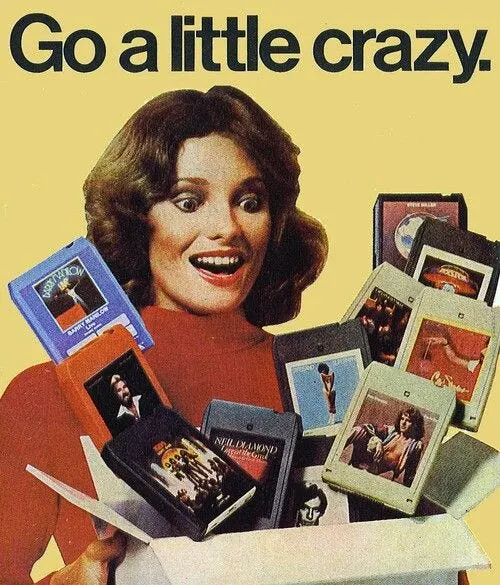
Who listens to Barry Manilow and Kiss?
If a music company complained about Columbia House’s fast and loose business model, the House would just stop selling their albums. Needless to say, a lot of record companies chose to take it on the chin rather than be squeezed out of the House’s huge market and let their artists flounder in obscurity.
There were a number of flaws in Columbia House’s business model that took their toll over time. Wise, but less than honorable, consumers found ways to game the system and set up dummy accounts to get dozens of albums for a few bucks. A number of people joined the club, got their records, and bounced, never to be heard from again. And other music publishers, like BMG, set up their own clubs, driving a wedge into Columbia House’s mail order monopoly.
Columbia House was a billion-dollar company in the 1990s, but its fortunes slipped rapidly. The introduction of MP3s confronted the House with a technology to which it could not adapt. The company was shuffled around from buyer to buyer, and, in 2005, it ended up under the same corporate umbrella as rival BMG. In 2014, Columbia House reported revenues of only $17 million, and it filed for bankruptcy the next year.
Columbia House still exists as a DVD club, using basically the same model it pioneered decades ago but with flicks. It is operated by a group called Edge Line Ventures LLC, but Sony holds title to the Columbia House trademark.
As for all of you who stiffed Columbia House and never paid them their money, consider your debt forgiven. The music is yours to keep.


