Mary Shelley’s Imprint on Cinema
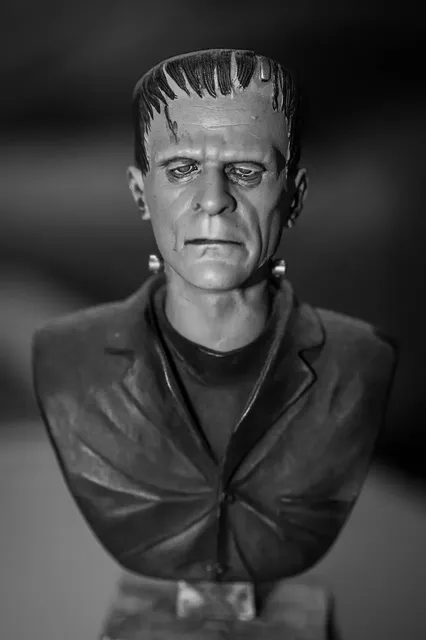
It has been over 200 years since Mary Shelley’s gothic masterpiece, Frankenstein, or the Modern Prometheus was first published. The story of a man who builds a creature only to shun him and leave him to the mercy of the world has lived on in popular culture. Considered the world’s first science fiction novel, Frankenstein may be one of the most widely known books in the English language. (How many people have actually read it is another point entirely.)
The 19-year-old Shelley (then Godwin) first conceived Frankenstein during an extended ghost-storytelling session while on holiday in Switzerland in 1816. She was coaxed into committing her tale to paper by her lover and soon-to-be husband, the poet Percy Shelley. The book was published two years later.
Typical of the chauvinism of the time, the public initially assumed that Percy had written Frankenstein and put Mary’s name on it as a gift to his bride. But Mary had a strong intellectual pedigree. Her mother, Mary Wollstonecraft, was a noted philosopher and feminist, and her father, William Godwin, was a political philosopher and novelist. Mary would take public credit for authorship in subsequent editions of the novel, and she would continue to write for the rest of her days, but nothing would ever touch the renown of her first novel.
Frankenstein is more than just a classic novel. It is part of our cultural lexicon, a metaphor for science run amok and the dangers of playing God. It has inspired numerous other books, some of which have achieved classic status in their own right. Frankenstein would also spawn a cottage industry in cinema.
From the earliest days of film, moviemakers were looking to Shelley’s book as source material. There were three adaptations during the silent era including a 1910 version made by Thomas Edison’s Edison Studios that still exists. Two other versions, 1915’s Life Without Soul, and the 1920 Italian film, The Monster of Frankenstein, are both sadly lost to history as the negatives decayed before they could be preserved.
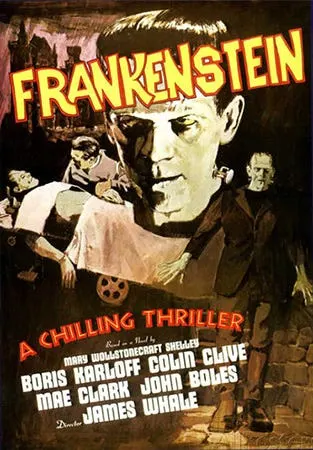
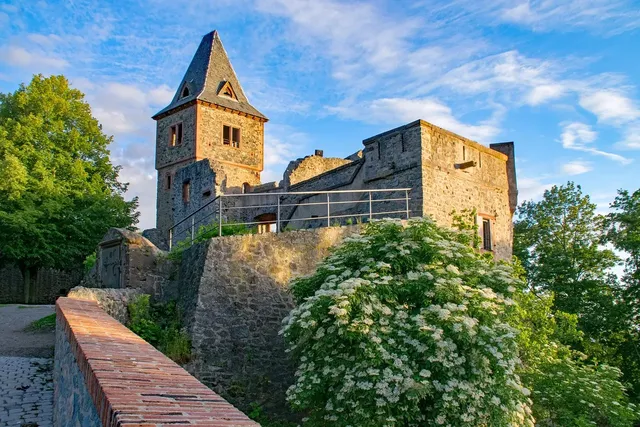
Frankenstein (1931) — This is the film that started it all. James Whale’s classic introduced a number of tropes that were not in the original novel, but became part of the story’s legend. Igor, grave robbing for spare body parts, and the creepy medieval castle were all cinematic inventions, but they do not take away from the core of the story or the sympathy we feel for Boris Karloff’s brilliantly played creature.
Bride of Frankenstein (1935) — One of the few sequels to ever be considered better than the original and the best of Universal’s horror franchise, this one, also directed by Whale, brings back the original cast and includes Elsa Lanchester in two roles, as the bride of the monster and as Mary Shelley in a creative prologue that recreates one of the real-life discussions that led to her novel. Another significant change took place with this film. Many would begin referring to the creature as Frankenstein, even though that is the name of the scientist who created him. The creature itself never had a name in Shelley’s novel.
Frankenstein Meets the Wolf Man (1943) — Long before the Marvel Cinematic Universe started bringing together different franchises, Universal Studios brought together its various monsters to duke it out on screen. This was the first of several mash-ups that would pair off the monster against the Wolf Man and others. In 1944, House of Frankenstein would bring Dracula into the mix. The quality of Universal’s Frankenstein films began to suffer, and after this point things got downright campy. How campy? Try Abbott and Costello Meet Frankenstein (1948).
The Curse of Frankenstein (1957) — The first Frankenstein movie made by Hammer Films and the first one made in color. This British studio is best known for its string of horror films that it made in the 1950s and 60s, and it dominated the market for much of that time. They made a number of unrelated Frankenstein flicks, each one just a bit more schlocky than the one before it.
Young Frankenstein (1974) — Mel Brooks has skewered many a genre in his day, but this black and white spoof of Universal monster movies has to be the legendary writer/director’s best work. Gene Wilder, Madeline Kahn, Teri Garr, Cloris Leachman, and Marty Feldman are all in top form, as is Peter Boyle, the only Frankenstein monster to ever perform .
Mary Shelley’s Frankenstein (1994) — Billed as a faithful adaptation to Shelley’s original novel, this one was directed by Kenneth Branagh, who also leads an all-star cast that included Robert DeNiro as the monster. Despite its sticking closely to the original novel and the caliber of talent involved, this film was not well received by audiences or critics.
We have not seen the last of Frankenstein or his monster. In fact there have been well over a dozen more films in just the last twenty years. Whether the Frankenstein movies be good or bad, well-intentioned or completely off the wall (Frankenhooker, anyone?), the monster continues to live on film and television much to audience delight. And there is no reason to think it will be going away anytime soon, or perhaps ever.