In Praise of Schlock Cinema

I love movies. They take me to places I’ve never been, show me things I’ve never seen, introduce me to people I’d never otherwise meet. They entertain me, and they make me think. Most of the time.
I won’t go into specific examples of what I think is good or bad. I have wide-ranging tastes, and in the end, it’s really just my opinion. As the saying goes, one person’s trash is another person’s treasure. All I know is that I don’t want my taste in cinema to be guided by the conventional view of what is good versus what is bad, and that happens a lot in our hyper-critical society. Critics and self-appointed film scholars often say that blockbusters are empty and mindless, foreign films are brilliant, and low budget genre films are schlock.
Well, some of that schlock is rather fun. Not every movie has to change my life. Sometimes I just want to put my brain on a shelf, sit back, and be entertained.
That’s how I discovered an appreciation for Menahem Golan and Yoram Globus. I recently watched, and highly recommend, a 2014 documentary I found on Netflix, Electric Boogaloo: The Wild, Untold Story of Cannon Films.These were guys who genuinely loved everything about movies. They loved watching them, they loved making them, and they loved coming up with new ways to entertain audiences.
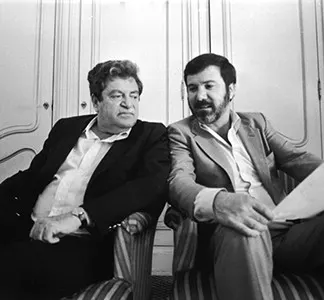
Golan and Globus were cousins who grew up in Israel as rabid movie buffs. They went into the film business together, and in the 1970s, they dominated the Israeli film market by making low budget sex romps that they knew would sell tickets. In 1978, they came to America and purchased Cannon Films, a struggling indie outfit whose only claims to fame up to that point had been Joe, a well-received drama depicting a violent backlash against the counterculture (hippies vs. hardhats), and bringing several soft-core Swedish porn films to American screens.
Golan and Globus, nicknamed the Go-Go Boys, set to work making movies that were geared for profit. Their formula was simple: take bottom-shelf scripts with exploitative elements that moviegoers would like, film them on super-tight schedules with low budgets, and put them in theaters. They kept expenses low. They didn’t do extravagant power lunches, play golf, ride in limousines, or go along with any of the trappings of the traditional Hollywood studio. Their motto was to put 99 cents of every dollar up on the screen. With Golan as the brash idea man and Globus as the quiet business brain, they quickly made a fortune.
Cannon under the Go-Go Boys was driven by pure passion. Golan could come up with an idea for an entire film during a meeting, wildly describing how it would open, key plot points, lines of dialogue and a conclusion right off the top of his head. And in his mind, every movie was going to be a hit. If a rough edit of a film didn’t meet his expectations, he would recut it himself, sometimes completely changing the plot, and sometimes making it totally incoherent. But that didn’t matter. Another movie was made and headed for the theaters.

The conventional film industry did not look kindly on the Go-Go Boys. They were considered reckless, unscrupulous, junk peddlers who would do anything to make a buck. But make a buck they did. They pioneered the concept of international film sales. They worked with past-their-prime talent (Charles Bronson), B-Movie action staples (Chuck Norris), up-and-comers (Jean-Claude Van Damme), and directors who couldn’t find work anywhere else (Tobe Hooper). They delivered films that made a mint during the heyday of home video. Lifeforce, Invasion USA, the increasingly cartoonish Death Wish franchise, and a whole boatload of Ninja movies is just a small sample of Cannon’s output.
Along the way, a few crossover gems popped up. Established directors began working for Cannon, including John Frankenheimer, Barbet Schroeder, Fred Schepisi, Herbert Ross, John Cassavetes, Robert Altman, and Franco Zeffirelli. They were drawn to Cannon because they could make the films they wanted without having studio big shots breathing down their necks. The result was critically acclaimed films like , , and Otello. But these were few and far between.

Golan and Globus eventually became victims of their own success. As they made more money, they spent more money. Budgets got bigger, but not big enough to make their so-called extravaganza pictures any good. They secured the rights to Superman and Masters of the Universe, but the resulting films featured lousy special effects and crashed any franchise opportunities. They also over-leveraged. With dozens of films in production, Cannon had to sell next year’s slate of films (often based on nothing but some posters and one-line concepts) in order to pay for the current year’s productions.
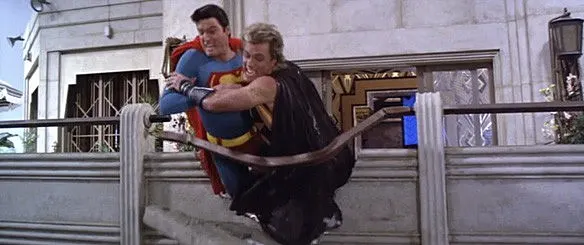
By 1987 the party was over. Cannon’s big-budget pictures flopped left and right. Sure, they were fun to watch, but for all the wrong reasons. Golan and Globus were forced to sell off most the assets they had acquired, and Cannon was taken over by a holding company that restructured the studio.
Before Menahem Golan and Yoram Globus wandered off into the sunset, they left behind a collection of movies that entertained a lot of people, me included. Okay, the laughs I drew from a lot of these films were unintentional, and I knew I was watching bad acting and convoluted plots. But when I think about the life the Go-Go Boys lived, the mark they made on the industry, and the passion they had for filmmaking, I can freely admit that I enjoyed every minute of it.
“The name of the game is to do, not just blah, blah, blah, blah, blah, talk about it. If something excites you, be brave and go, and try to do it good. But do it.” Menahem Golan