Finding Joy in 1970s Feel-Bad Sci-Fi
It’s a fairly common assumption among historians and anthropologists that you can tell a lot about a society at any given time by taking a look at its art. Over the last hundred years, cinema has been a window into America’s collective soul, exposing our moods, hopes, dreams, and fears from one decade to the next.
For instance, if you look at some of the classic science fiction films of the 1970s, with their nihilistic storylines and downbeat endings, you might think that America was going through a pretty depressing time. And you’d be right.
In the real world of the 1970s, Americans were nursing a national hangover left over from the assassinations, war, and violent social turmoil of the 1960s. Trust in government was at an all-time low thanks to the shenanigans of the Nixon administration. The inner cities were crumbling, and the environment was turning to crap right before our eyes, to say nothing about the fact that disco was starting to rear its ugly head. People could hardly be blamed for having a bleak outlook on the future.
Several notable science fiction films of the 70s addressed these issues in clever, if dismal ways. Together they give us a glimpse into the mindset of filmmakers and audiences at that time. Many of these movies were set in a not too distant future that is actually our present. They may have depicted a hopeless view of what lay ahead, but they probably also motivated people to take action and tackle our problems rather than be resigned to the sinister fate they portrayed on screen.
Here’s a list of the some of the great sci-fi downers of that decade. They may not seem so bleak now since the world they predicted did not come to pass. Not yet, at least.
A Boy and His Dog (1975) — Forget about World War III. This film takes us to 2024, which is the other side of World War IV. A pre-Sonny Crockett Don Johnson and his telepathic mutt (don’t ask) wander the wasteland looking for food and sex. They stumble across an underground enclave where the delusional rulers hold Johnson hostage so that he can help repopulate their twisted society. Certainly not your typical post-apocalyptic movie, A Boy and His Dog became a black comedy cult classic.

Don Johnson and his more intelligent companion in “A Boy and His Dog.” Image: LQ/JAF Productions.
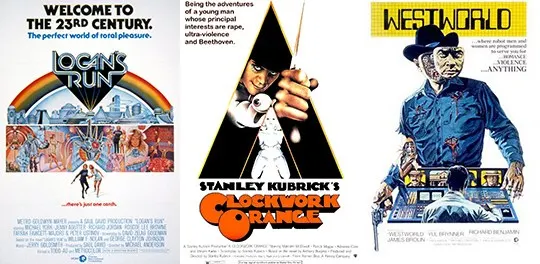
A Clockwork Orange (1971) — Adapted from Anthony Burgess’ 1962 novel and set in the not too distant future, this Stanley Kubrick classic follows humble narrator Alex DeLarge and his droogs on their search for a bit of the old ultra-violence. Inspired by concerns over the rise of youth violence and the growing power of the state over the people, the messages in this one remain timeless in part because it’s a world that could still be right around the corner.
Logan’s Run (1976) — This one takes us way out to the 23rd century where the solution to overpopulation and environmental destruction is to put everyone under great climate-controlled domes where machines handle all the work and life is nothing but sex, drugs, and skimpy outfits. Of course, this balance can only be maintained if everyone is executed once they reach the age of 30 under the ruse that they will “renew” and be born again. This one takes on all the sacred cows of dystopia — environmentalism, ageism, hedonism, authoritarianism, sexuality, and racism (the only non-white character is a robot voiced by Roscoe Lee Brown).
The Omega Man (1971) — This second adaptation of the Richard Matheson novel, I Am Legend, features Charlton Heston as the last man alive in 1977 after a chemical war has turned the few survivors into a gang of mutant killers. The big messages here are about keeping science from running amok and keeping our humanity when the chips are down. Way down.
Rollerball (1975) — In the early 21st century, the world is run by corporations that keep the docile masses entertained with a violent game called Rollerball. Part roller derby, part jai alai, part kick the living s**t of somebody, it is a sport with a global audience and its biggest star is played by James Caan, who wants to retire while he still has all his teeth. But the audience has an ever-increasing blood lust, and Big Energy calls the shots. This film takes corporatism and media violence to an extreme, but it also reminds us that this is the world we have made.
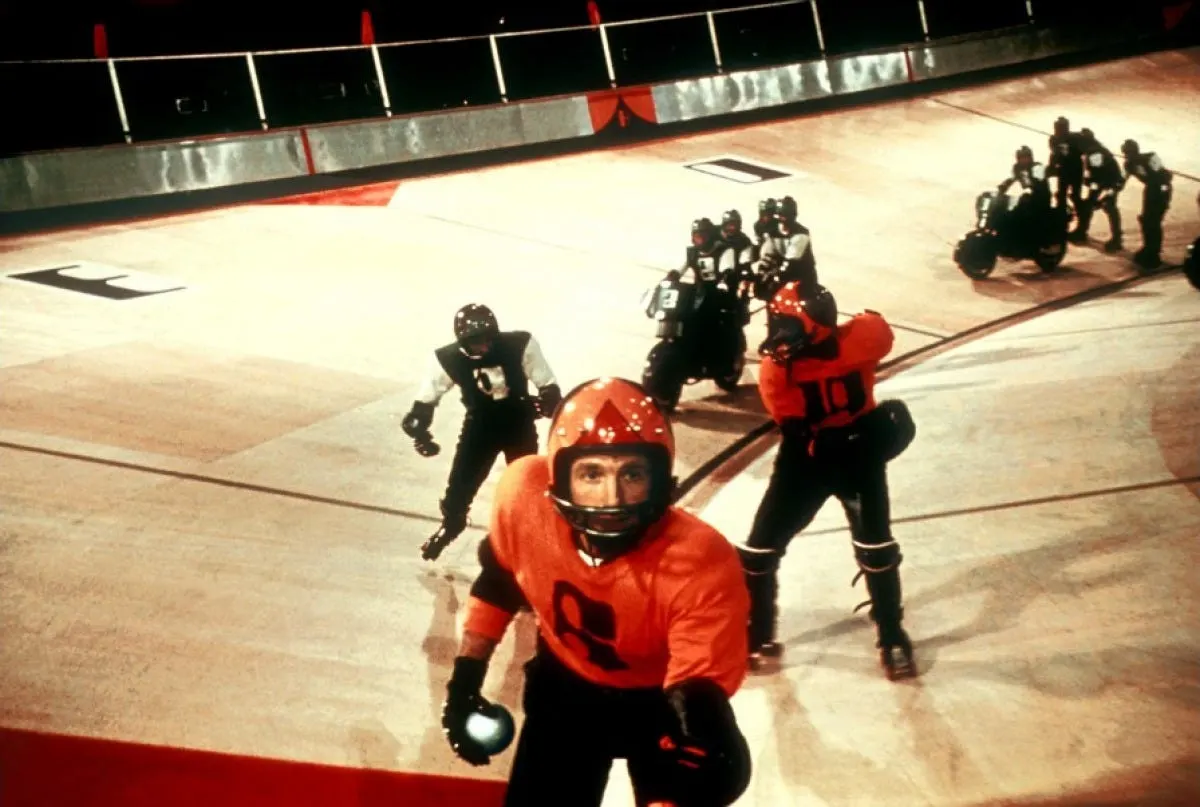
James Caan leads his team to victory in “Rollerball.” Image: United Artists.
Silent Running (1972) — Douglas Trumbull, who is best known as one of cinema’s special effects geniuses, directed this futuristic tale set on a space station that holds all that remains of Earth’s vegetation. When the order comes to blow up the greenhouses and return home, dedicated botanist Bruce Dern thinks it a better idea to ignore the order and kill his shipmates. Much of the film features only Dern and his three robot companions, and the isolationist vibe weighs heavy as it becomes increasingly obvious that his efforts will lead to a dead end.
Soylent Green (1973) — It’s 2022, and New York City is home to 40 million people. Climate change is slowly cooking the planet, and food and water are in short supply, except for the wealthy elite. Charlton Heston (yep, him again), plays a beat cop investigating the murder of a top board member of the Soylent Corporation, which controls the food supply for half the world. Heston’s investigation leads to a terrible truth and one of the .
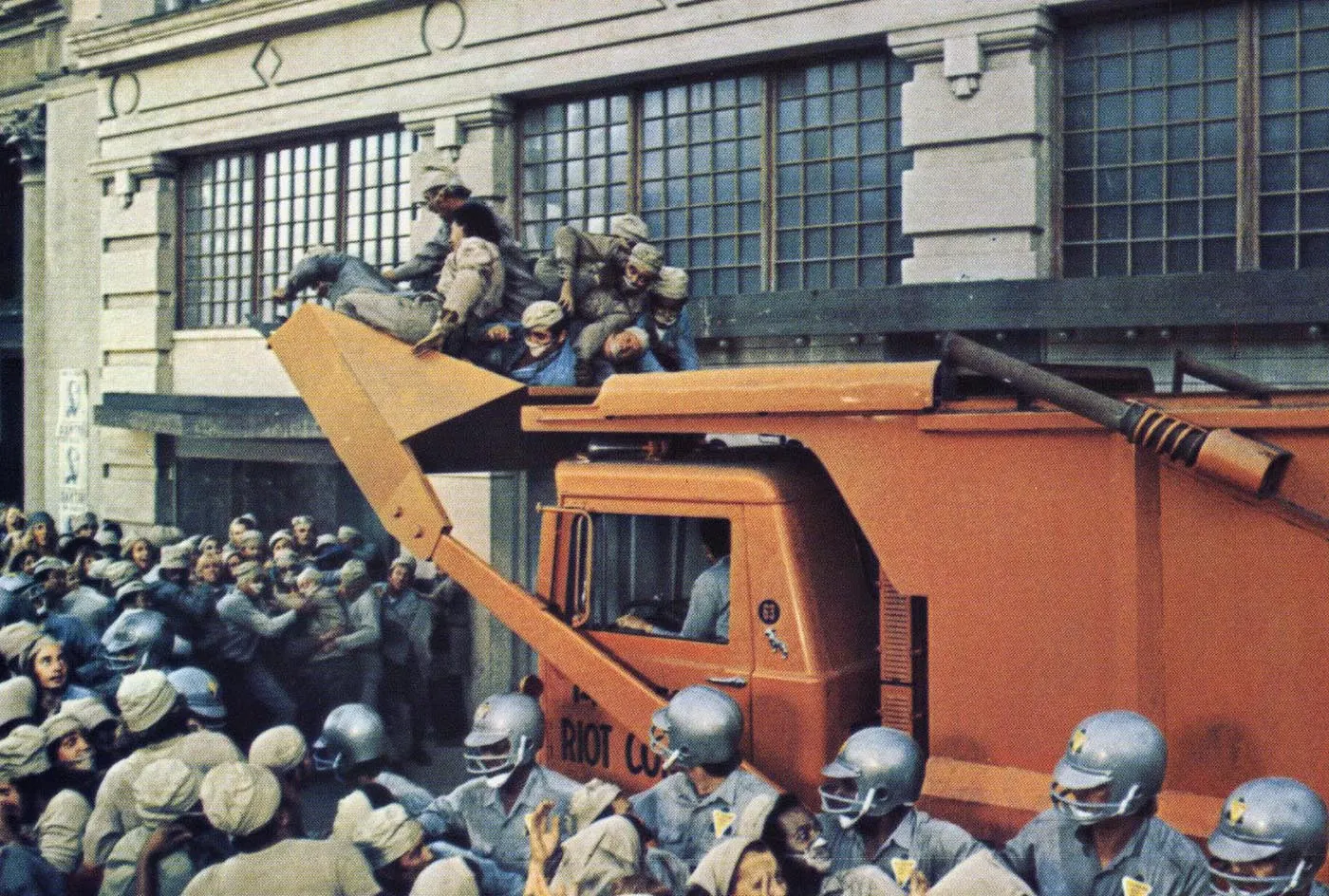
Crowd control in “Soylent Green.” Image: MGM.
Westworld (1973) — Androids at a futuristic pleasure palace run amok and start killing the guests. This highly entertaining film directed by Michael Crichton (who gave us the original novel Jurassic Park) warns of the dangers of putting too much faith in technology and delivers its message in a much less convoluted way than HBO’s current version.